Exploring the Effects of Board Diversity and Ownership Structure on Accounting Conservatism in India: Evidence from an Accrual-Based Model
Vaghela Jigarkumar Laljibhai* 
1School of Commerce , Gujarat University , Gujarat, India .
This study explores the effects of board diversity and ownership structure on accounting conservatism in India. It analyzes a sample of BSE 100-listed firmsin India from 2010 to 2024. Accounting conservatism is measured using the accrual-based modeand serves as the dependent variable in the study. The study examines several important board characteristics, including gender diversity, independence, financial expertise, and multiple directorships. It also examines the ownership structure, with a focus on managerial, institutional, and foreign ownership. Additionally, the study considers firm-specific control variables, including firm size, growth, profitability, and leverage. This study employs panel data analysis, and findings reveal that both board diversity and ownership structure have a significant impact on accounting conservatism in Indian firms. Specifically, firms with diverse boards, substantial institutional ownership, and foreign shareholding are more likely to adopt less conservative accounting practices, thereby enhancing financial transparency. However, the effectiveness of board independence remains uncertain in India due to concentrated ownership and weaker regulatory enforcement. The presence of financial expertise on the board and managerial ownership shows a negligible negative impact on accounting conservatism. In contrast, holding multiple directorships can serve as a valuable external resource, contributing to improved accounting conservatism. These findings underscore the significance of robust corporate governance frameworks and active ownership in fostering transparency and accountability in emerging markets. The study provides valuable insights for regulators, policymakers, and corporate boards seeking to improve the quality of financial reporting and protect investors in India.
Copy the following to cite this article:
Laljibhai V. K. "Exploring the Effects of Board Diversity and Ownership Structure on Accounting Conservatism in India: Evidence from n Accrual-Based Model". Journal of Business Strategy Finance and Management, 8(1).
Copy the following to cite this URL:
Laljibhai V. K. "Exploring the Effects of Board Diversity and Ownership Structure on Accounting Conservatism in India: Evidence from n Accrual-Based Model". Journal of Business Strategy Finance and Management, 8(1). Available here: https://bit.ly/4dDc8Tx
Citation Manager Publish History



Introduction
The concept of accounting conservatism is a fundamental principle based on prudence, which has evolved into a more complex financial reporting mechanism influenced by empirical research and regulatory changes. Accounting conservatism ensures that losses are recognized promptly while gains are only acknowledged once they are realized (Basu, 1997). Givoly and Hayn (2007) emphasize the importance of accounting conservatism in accelerating the recognition of losses while delaying the recognition of gains. This asymmetric timing in recognizing bad versus good news serves as a protection for stakeholders by providing a prudent view of a firm’s financial soundness (Watts, 2003).In India, there has been a growing emphasis on accounting conservatism due to the implementation of Indian Accounting Standards, which align with International Financial Reporting Standards. Simultaneously, corporate governance encourages board diversity through regulations such as the Companies Act of 2013 and theSecurities and Exchange Board of India (SEBI). Indian corporate governance norms mandate that independent directors constitute at least half of the board and appoint at least one female director to their boards in listed firms (MCA, 2013; SEBI, 2017).
However, empirical research indicates that simply having an independent board does not guarantee effective corporate governance, as promoter control often limits the autonomy of independent directors (Gopalan & Jayaraman, 2012). Additionally, concerns persist regarding the absolute independence of these directors, as their appointments are often influenced by controlling shareholders (Bhagat & Bolton, 2019). While the representation of women on boards is slowly improving, it remains low overall. Many barriers and challenges continue to hinder their careers, prompting growing global research interest in the effect of diversity on boards (Khidmat et al., 2020; Shahzad et al., 2020; Arvanitis et al., 2022; Alshirah et al., 2022; Chatterjee & Nag, 2023; Raut et al., 2023). In the Indian corporate setting, where promoter-controlled ownership persists and institutional investors are acquiring influence in shaping governance, accounting conservatism serves as a key mechanism to protect stakeholder interests (Ahmed & Duellman, 2007; García Lara et al., 2009; Alkordiet al., 2017). This study utilizes the Givoly and Hayn (2000) accrual-based model, which has been widely used in previous research to measure accounting conservatism in emerging markets (Sharma & Kaur, 2021).
Several empirical studies (Ahmed & Henry, 2012; Yunos et al., 2012; Nasr & Ntim, 2018; Saeed & Saeed, 2018; Vishnani et al., 2019; Sharma & Kaur, 2021) have explored the relationship between corporate governance and accounting conservatism, but the findings remain inconclusive, especially in the context of India. This study aims to address this gap by exploring the effect of board diversity and ownership structure on accounting conservatism in Indian firms listed on the BSE 100 index over a period of 15 years. Employing the Givoly and Hayn (2000) accrual-based model, this study contributes valuable insights for policymakers, corporate regulators, and investors. The results could enhance governance standards, improve financial transparency, and increase the reliability of financial reporting for companies in India.
This study is organized as follows. Section 2 reviews the relevant literature on accounting conservatism, board diversity, and ownership structure, presenting the hypotheses. Section 3 outlines the research methodology. Section 4 discusses the empirical results and includes a comprehensive analysis. Section 5 discusses results and discussion. Lastly, Section 6 concludes with a discussion of the theoretical and practical implications, limitations, and suggestions for future research.
Materials and Methods
Theoretical Justification
This study employed Agency Theory, Resource Dependence Theory, and Positive Accounting Theory to clarify the relationships among board diversity, ownership structure, and accounting conservatism.This study is fundamentally based on agency theory, which highlights the conflict between managers and shareholders (Jensen & Meckling, 2019). Board diversity enhances the significance of monitoring by obtaining different perspectives, experiences, and expertise, thereby reducing agency costs and enabling conservative financial practices (Adams & Ferreira, 2009). Moreover, the ownership structure, primarily comprising institutional and foreign ownership, enhances external monitoring and aligns managerial incentives with shareholder interests, thereby increasing the demand for prudent accounting practices (La Porta et al., 2000; Alkordiet al., 2017).According to resource dependence theory, diverse boards improve decision-making by incorporating varied expertise and enhancing legitimacy, which in turn strengthens the demand for reliable financial reporting (Pfeffer & Salancik, 2015; Adams & Ferreira, 2009).Positive Accounting Theory provides valuable insights into why firms choose specific accounting policies, such as conservatism, based on economic incentives and contractual arrangements (Watts & Zimmerman, 1978). It complements agency theory by emphasizing the economic motivations behind conservative accounting practices in contexts with strong governance mechanisms.Following the discussion of relevant theories and prior literature, a theoretical framework has been developed, as illustrated in Fig. 1. The subsequent subsections provide a thorough review of the related literature.
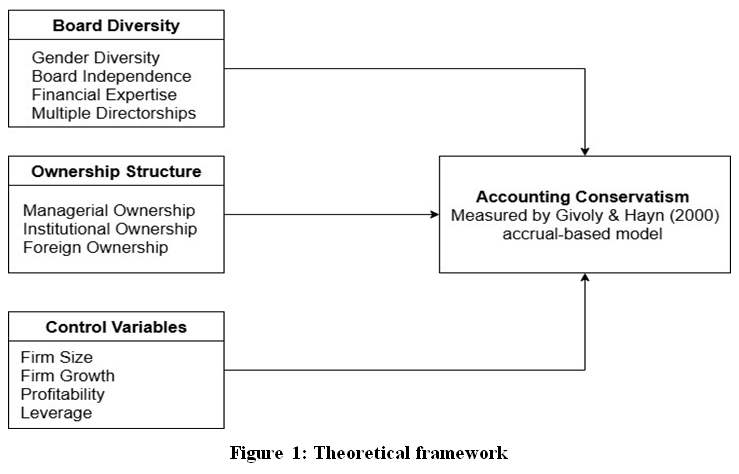 | Figure 1: Theoretical framework
|
Board Gender Diversity and Accounting Conservatism
Board gender diversity has been identified as an important factor influencing accounting conservatism and enabled within corporate governance in India (Sarkar & Selarka, 2021; Sayik, 2022). Although the existence of women in the corporate world is evolving, their overall representation remains low. Emerging economies, such as India, present different challenges, including sociocultural biases, limited female representation in leadership roles, and board tokenism, which may undermine the intended benefits of gender diversity. Several empirical studies (Ahmed & Duellman, 2007; Yunos et al., 2012; Nasr & Ntim, 2018; Vishnani et al., 2019; Sharma & Kaur, 2021) have explored the relationship between corporate governance and accounting conservatism, but no such study has studied the relationship between gender diversity on the board and the level of accounting conservatism. Thus, this study examines whether corporate board gender diversity, as measured by the percentage of female directors on the board, affects accounting conservatism in India. Thus, based on the literature review discussion, the following hypothesis is proposed.
H1 = Board gender diversityhas a significant impact on accounting conservatism.
Board Independenceand Accounting Conservatism
Board independence is a vital element of corporate governance, significantly contributing to the improvement of accounting conservatism (Sharma & Kaur, 2021). Numerous empirical studies (Yunos et al., 2012; Yuner et al., 2017; Nasr & Ntim, 2018) have consistently demonstrated a positive relationship between board independence and accounting conservatism. Similarly, Ahmed and Henry (2012) found that independent directors reinforce unconditional conservatism. Additionally, research from South Asia and the Middle East provides supporting evidence, showing that independent directors encourage more conservative financial reporting practices (Nasr & Ntim, 2017; Saeed, 2020). In contrast, García Lara et al. (2009) concluded that board independence has no impact on accounting conservatism across different institutional settings. The impact of independent directors on accounting conservatism remains uncertain in emerging markets due to concentrated ownership and weaker regulatory enforcement (Saeed, 2020). Most research has concentrated on developed economies, resulting in limited empirical evidence for emerging markets, such as India, where corporate governance norms require that independent directors make up at least half of the directors on the boards of listed firms. Addressing these significant gaps, this study examines how board independence influences the accounting conservatism in the Indian-listed firms. The following alternative hypothesis is drawn from existing literature:
H2 = Board independence has a significant impact on accounting conservatism.
Board Financial Expertiseand Accounting Conservatism
Financial expertise on the board is essential for good corporate governance, as it ensures effective oversight of the financial reporting process and enhances financial transparency (Hamdan et al., 2013; Yunos et al., 2012). Previous studies indicate that financially knowledgeable boards are better at detecting aggressive earnings management and ensuring timely loss recognition, which promotes conservative accounting practices (Yunos et al., 2012; Sharma & Kaur, 2021). Numerous empirical studies (Ahmed & Duellman, 2007; Ahmed & Henry, 2012; Nasr & Ntim, 2018; Vishnani et al., 2019) have explored the relationship between corporate governance and accounting conservatism. However, there has been no research examining the relationship between financial expertise on the board and the level of accounting conservatism, specifically in the Indian context. Therefore, this study examines whether corporate board financial expertise, as measured by the presence of directors with professional experience in accounting and finance, influences accounting conservatism in Indian-listed firms. The findings could enhance governance standards, improve financial transparency, and increase the reliability of financial reporting in India. The following alternative hypothesis is drawn from existing literature:
H3 = Board Financial Expertise has a significant impact on accounting conservatism.
Multiple Directorshipsand Accounting Conservatism
Multiple directorships enhance the quality of decision-making by acting as functional external resource mechanisms (Kiel & Nicholson, 2006). Numerous studies have examined the relationship between multiple directorships, accounting conservatism, and yielded mixed findings (Saleh et al., 2005; Sharma & Kaur, 2021). Saleh et al. (2005) examined the possibility that directors with multiple appointments may reduce earnings management, especially in companies with unmanaged earnings. Sharma and Kaur (2021) argue that directors who serve on multiple boards may acquire managerial experience. However, they may find it challenging to apply this knowledge because of their limited availability, which could lead to a decrease in accounting conservatism.The relationship between corporate governance and accounting conservatism has been the focus of several empirical studies (Ahmed & Duellman, 2007; Ahmed & Henry, 2012; Nasr & Ntim, 2018; Vishnani et al., 2019), but no such study has examined the relationship between multiple directorshipson the board and the level of accounting conservatism in the Indian context. This gap necessitates further exploration to understand how multiple directorships affect accounting conservatism in Indian-listed firms.The following alternative hypothesis is drawn from existing literature:
H4= Multiple directorshipshave a significant impact on accounting conservatism.
Managerial Ownershipand Accounting Conservatism
Managerial ownership plays a crucial role in influencing conservative accounting practices (Ho, 2009). Jensen and Meckling (2019) suggested that increased managerial ownership aligns management's interests with those of shareholders, thus reducing agency costs. Yunos et al. (2012) and Ahmed and Henry (2012) supported this idea, suggesting that increased managerial ownership can boost accounting conservatism as managers become more cautious in financial reporting to safeguard their wealth linked to the company's value. According to Ahmed and Duellman (2007), combined with efficient board oversight, managerial ownership encourages accounting conservatism and reduces information asymmetry. Conversely, Ball and Shivakumar (2005) suggested that external elements, such as regulatory pressures, may have a greater impact on accounting conservatism than internal ownership structures. There has been considerable research on the relationship between managerial ownership and accounting conservatism; however, there is a lack of empirical evidence specifically exploring this relationship within the Indian context. This study aims to fill that gap by examining how varying levels of managerial ownership influence accounting conservatism in Indian-listed firms.The following alternative hypothesis is drawn from existing literature:
H5 = Managerial Ownershiphas a significant impact on accounting conservatism.
Institutional Ownershipand Accounting Conservatism
Institutional ownership plays a significant role in influencing accounting conservatism through monitoring and governance mechanisms (Ahmed & Duellman, 2007). (Ahmed & Henry, 2012) suggest that a higher proportion of institutional ownership increases the demand for quality financial reporting, prompting managers to adopt conservative accounting practices. LaFond and Roychowdhury (2008) found that when ownership and control are separated, firms with higher levels of institutional ownership tend to display greater accounting conservatism. Conversely, Ahmed and Duellman (2007) report that higher institutional ownership can reduce the need for conservative accounting, potentially enabling earnings management. These Conflicting results regarding the influence of institutional ownership on accounting conservatism highlight the need for further investigation. Therefore, this study aims to address these gaps by examining how varying institutional ownership affects accounting conservatism in emerging markets, such as India. The following alternative hypothesis is drawn from existing literature:
H6= Institutional Ownershiphas a significant impact on accounting conservatism.
Foreign Ownershipand Accounting Conservatism
Foreign ownership plays a pivotal role in limiting agency costs (Jensen & Meckling, 2019). Ahmed & Henry (2012) and Ahmed & Henry, 2012) reported a positive relationship between foreign ownership and financial reporting quality. Such findings support the Agency Theory, which suggests that foreign ownership can act as a mechanism to enhance transparency and reduce opportunistic managerial behavior (Ahmed & Duellman, 2007). While prior studies have explored the relationship between foreign ownership and accounting conservatism in various regions, such as the US, Canada, Australia, and the Netherlands(Ahmed & Duellman, 2007; Ahmed & Henry, 2012; Yuner et al., 2017), there is a lack of research focusing on how different levels of foreign ownership impact accounting conservatism in emerging markets, including India. This study aims to fill this gap by examining how foreign ownership influences accounting conservatism in Indian-listed firms. The following alternative hypothesis is drawn from existing literature:
H7= Foreign Ownershiphas a significant impact on accounting conservatism.
Sample and data
The BSE 100 companies in this study were selected through purposive sampling. The study uses secondary data spanning fifteen years, from 2010 to 2024. Twenty-three of the selected companies belong to the banking and financial services sector; however, these companies were excluded from the study because Indian regulations on disclosure and profitability do not apply to this sector. Additionally, fifteen companies were excluded due to missing data, resulting in a final sample of 62 companies for analysis. The dataset comprises financial and governance disclosures derived from publicly available annual reports and financial databases, such as Prowess, maintained by the Centre for Monitoring Indian Economy (CMIE).
Variables and Measurement
This study examines the influence of board diversity and ownership structure on accounting conservatism in Indian-listed firms, utilizing the accrual-based model developed by Givoly and Hayn (2000). Previous research (Alkordi et al., 2017; Nasr & Ntim, 2018; Sharma & Kaur, 2021) has demonstrated that accrual-based approaches have gained prominence due to their ability to capture firm-specific variations in conservative accounting practices. The empirical model includes dependent, independent, and control variables, as detailed in Table 1.
Table 1: Variables and Their Measurement
Variable | Measurement | Literature support |
Dependent variable | ||
Accounting Conservatism (ACC-CONS) | Givoly & Hayn (2000) accrual-based model: Accruals = (EBEXTit + DEPit - OCFit)/TA ACC-CONS = (Accruals / 3 years) ACC-CONS refers to accounting conservatism, measured using an accrual-based approach for firm i in year t. In this context, EBEXT represents earnings before tax and extraordinary items, DEP stands for depreciation expense for the year, OCF indicates operating cash flow, and TA refers to total assets. | Givoly and Hayn (2000), Sharma and Kaur (2021), Nasr & Ntim (2018) |
Independent variable | ||
Board Gender Diversity (BGD) | The Percentage of female directors on the board | Sayik (2022), Singh et al. (2022) |
Board independence (BI) | The Percentage of independent directors on the board | Yuner et al. (2017), Nasr & Ntim (2018) |
Board financial expertise (BFE) | The Percentage of directors with financial expertise to total directors on the board | Hamdan et al. (2012), Yunos et al. (2012) |
Multiple directorships (BDSHIP) | Dichotomous with 1 if the board's members individually hold two or more directorships, and 0 otherwise. | Kiel and Nicholson (2006), Sharma and Kaur (2021) |
Managerial ownership (OWMAN) | The percentage of shares held by directors on the board of the total number of the firm’s shares. | Ahmed and Duellman (2007), Alkordi et al. (2017) |
Institutional ownership (OWINST) | The percentage of shares held by institutions of the total number of the firm’s shares. | Ahmed and Duellman (2007), Alkordi et al. (2017) |
Foreign ownership (OWFOR) | The percentage of shares held by foreign promoters of the total number of the firm’s shares. | Ahmed and Duellman (2007), Alkordi et al. (2017) |
Control variable | ||
Firm size (FSIZE) | The total assets are expressed as the natural logarithm | Nasr & Ntim (2018), Sharma and Kaur (2021) |
Firm growth (FGROWTH) | The percentage change in sales from the previous year, (current sales – previous year sales) / previous year sales. | Nasr & Ntim (2018), Sharma and Kaur (2021) |
Profitability (PROF) | It calculates the net income as a percentage of total assets at the end of the financial year. | Nasr & Ntim (2018), Sharma and Kaur (2021) |
Leverage (LEV) | Total debts divided by total assets | Nasr & Ntim (2018), Sharma and Kaur (2021) |

Model estimation
The study used panel data analysis to achieve its objectives and test the proposed hypotheses. This approach aligns with previous research (Nasr & Ntim, 2018; Sharma & Kaur, 2021).The study utilized a balanced panel comprising 930 observations for the estimated models. A combination of pooled and panel models was applied to a sample of 62 firms over 15 years. Statistical analysis was conducted using STATA and GRETL software.
The study performed several diagnostic tests on the sample data to ensure the robustness and reliability of the models (Nasr & Ntim, 2018; Sharma & Kaur, 2021; Mondal & Sahu, 2024). A multicollinearity test was employed in this study to assess probable correlations among the independent variables, as these correlations can misinterpret the estimated coefficients and compromise the model’s predictive accuracy (Gujarati & Porter, 2004). Additionally, the study performed specific diagnostic tests for the panel data to verify the suitability of the chosen panel regression model(Baltagi, 2005; Breusch & Pagan, 1980; Hausman, 1978). The tests included the Wald test, the Breusch-Pagan Lagrange multiplier (LM) test, and the Hausman test.The following statistical modelsare estimated in this study:
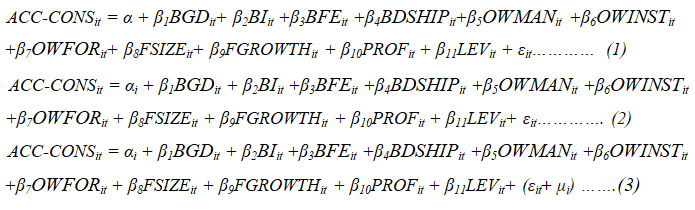
Here, ACC-CONSit means independent variables. In this equation, the variable ai represents the constant intercept specific to each cross-sectional unit. The letter i refers to the attribute of the equation that pertains to the cross-sectional unit, while t refers to the time series dimension. The coefficient B assumes that the error term follows a normal distribution. The column vector Xit, which contains dependent variables such as board financial expertise, independence, gender diversity,multiple directorships, managerial ownership, institutional ownership, foreign ownership, firm size, firm growth, profitability, and leverage, represents the independent variables for firm i at time t.
Results
Descriptive statistics
Table 2 shows the descriptive statistics for the variables involved in the analysis. The dependent variable, accounting conservatism (ACC-CONS), has a mean value of -0.2987 and a low standard deviation of 0.2078, suggesting consistent levels of conservatism across firms. Meanwhile, the mean proportion of females on the board of directors (BGD) is 13.35%, with a standard deviation of 12.16%, indicating that gender diversity on Indian boards remains limited. Board independence (BI) has an average of 53.8%, indicating compliance with SEBI's LODR regulations. Board financial expertise (BFE) has an average of 68.8%, indicating that many directors possess a financial understanding, which enhances the quality of monitoring.
In terms of ownership structure, Managerial ownership (OWMAN) averages 50.3%, reflecting concentrated control held by promoters.Institutional ownership (OWINST) has a mean of 33.03%, indicating an increase in external monitoring by institutions. In contrast, foreign ownership (OWFOR) has a low average of 5.87%, indicating limited involvement by foreign investors in most firms. Multiple directorships (BDSHIP) serve as a dummy variable, with 84.30% of directors holding multiple directorships on the board.
Regarding control variables, firm size (FSIZE) has a mean of 9.898, with moderate dispersion, reflecting the sample inclusion of large-cap firms.Firm growth (FGROWTH) exhibits significant variability, with an average annual growth rate of 13.69%. The average values for Leverage (LEV) and Profitability (PROF) are 0.2036 and 10.07, respectively.
Table 2: Descriptive statistics
Variable | N | Mean | Median | S.D. | Min | Max |
ACCCONS | 930 | -0.2987 | -0.2419 | 0.2078 | -1.221 | -0.0099 |
BGD | 930 | 13.35 | 10 | 12.16 | 0 | 70 |
BI | 930 | 53.8 | 50 | 10.79 | 10 | 91.67 |
BFE | 930 | 68.8 | 70.59 | 25.8 | 16 | 100 |
OWMAN | 930 | 50.3 | 52.02 | 17.49 | 0 | 89.5 |
OWINST | 930 | 33.03 | 31.81 | 12.61 | 1.11 | 85.23 |
OWFOR | 930 | 5.878 | 0 | 15.58 | 0 | 75 |
FSIZE | 930 | 9.898 | 9.763 | 1.445 | 5.824 | 13.79 |
FGROWTH | 930 | 13.69 | 11.75 | 21.26 | -74.52 | 175.9 |
LEV | 930 | 0.2036 | 0.0341 | 1.405 | -15.89 | 18.59 |
PROF | 930 | 10.07 | 8.652 | 8.031 | -45.71 | 51.61 |
Dummy variable | Dummy | N | (%) | |||
BDSHIP | Coded 0 | 146.00 | 15.70 | |||
Coded 1 | 784.00 | 84.30 |
Source: Author’s compilation
Correlation matrix and test of multicollinearity
Table 3 presents the correlation results for the key variables analyzed in this study. BGD and BFE demonstrate a positive and significant correlation with ACC-CONS, indicating that boards with a higher proportion of financially literate members and higher female representation are associated with greater accounting conservatism. Conversely, BI exhibits an insignificant correlation with ACC-CONS, suggesting that merely complying with independence requirements may not have a direct impact on accounting conservatism in the Indian context. There is a positive correlation between OWINST and ACC-CONS, indicating that institutional investors play a significant role in promoting prudent reporting practices within firms. In contrast, OWFOR demonstrates a significant negative association with ACC-CONS, indicating that foreign investors may prefer less conservative reporting. OWMAN shows no significant relationship with ACC-CONS, which may indicate conflicting incentives associated with promoter ownership.Correlation metrics indicate that FSIZE is positively correlated with accounting conservatism, while FGROWTH and PROF are negatively correlated, suggesting that high-growth and profitable firms may adopt less conservative accounting practices.
The correlation matrix showed no multicollinearity, as no correlation coefficients exceeded 0.80 (Gujarati & Porter, 2004). Additionally, the Variance Inflation Factor (VIF) values were below 5, and all tolerance values were above 0.30, indicating that multicollinearity is not a significant issue in this dataset (Gujarati & Porter, 2004).
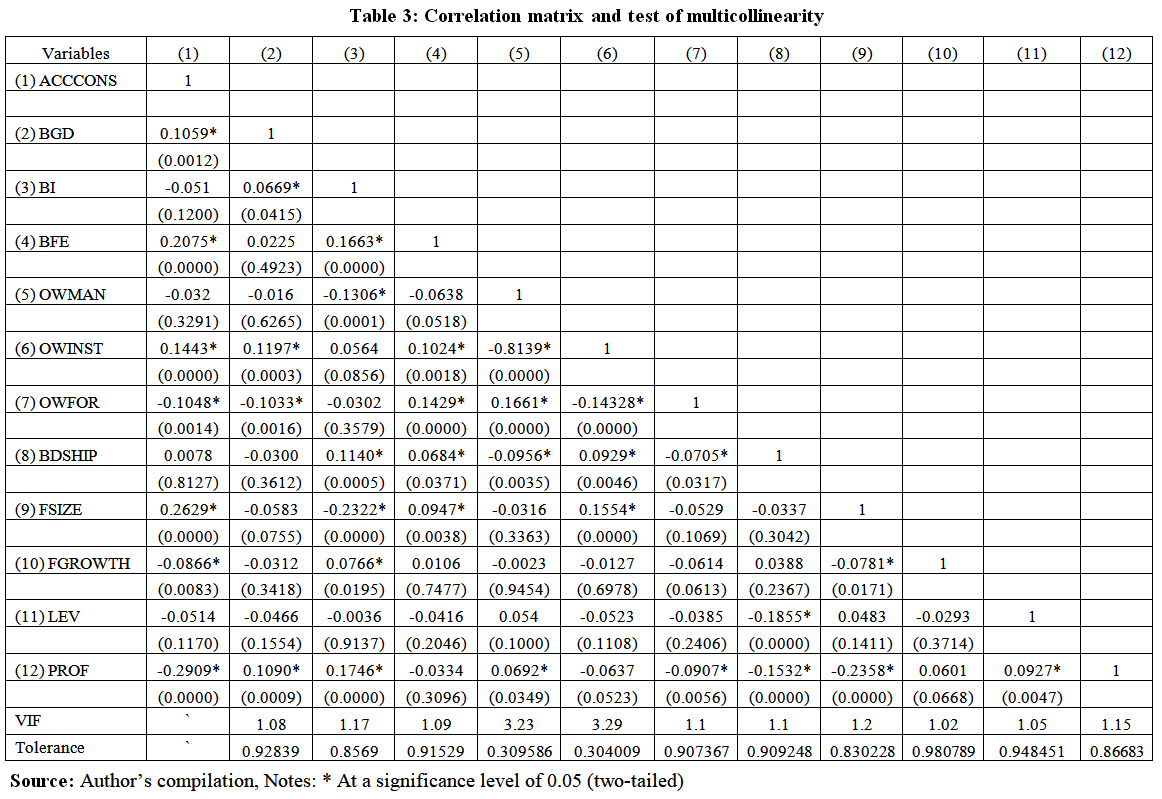 | Table 3: Correlation matrix and test of multicollinearity
|
Source: Author’s compilation, Notes: * At a significance level of 0.05 (two-tailed)
Panel data analysis
Table 4: Effects of Board Diversity and Ownership Structure on Accounting Conservatism
Variables | ACC-CONS Model | ||
Pooled Effect | Fixed Effect | Random Effect | |
const | -0.780206*** | -0.783900*** | -0.751096*** |
(0.0000) | (0.0000) | (0.0000) | |
BGD | 0.00161515*** | -0.000827623** | -0.000668510* |
(0.0019) | (0.0216) | (0.0584) | |
BI | 0.000283009 | -0.000106669 | -4.19077e-05 |
(0.6413) | (0.7315) | (0.8926) | |
BFE | 0.00157104*** | -0.000273744 | -9.98420e-05 |
(0.0000) | (0.2896) | (0.6907) | |
OWMAN | 0.00253799*** | -0.000393629 | -0.000377862 |
(0.0000) | (0.6012) | (0.5921) | |
OWINST | 0.00372947*** | -0.00189539*** | -0.00150869** |
(0.0000) | (0.0036) | (0.0179) | |
OWFOR | -0.00203417*** | -0.00389130*** | -0.00339977*** |
(0.0000) | (0.0000) | (0.0000) | |
BDSHIP | -0.0331831* | 0.040204*** | 0.0377599*** |
(0.0578) | (0.0004) | (0.0007) | |
FSIZE | 0.021002*** | 0.0651791*** | 0.0587369*** |
(0.0000) | (0.0000) | (0.0000) | |
FGROWTH | -0.000620532** | -0.000681062*** | -0.000665886*** |
(0.0315) | (0.0000) | (0.0000) | |
LEV | -0.00566328 | 0.00146194 | 0.00134369 |
(0.2017) | (0.5068) | (0.5422) | |
PROF | -0.00720695*** | -0.00436518*** | -0.00448360*** |
(0.0000) | (0.0000) | (0.0000) | |
Observation | 930 | 930 | 930 |
Number of Panels | 62 | 62 | 62 |
F- Value | 23.26355*** | 29.0667*** | 313.881*** |
Wald Test | 56782.9*** | ||
Breusch-Pagan LM test | 4221.36*** | ||
Hausman Test | 22.2306*** | ||
Notes: ***p < 0.01; **p < 0.05; *p < 0.10.
Table 4 presents the results of diagnostic tests on the sample data, verifying the robustness and reliability of the models. The Wald test for heteroskedasticity rejected the null hypothesis of constant variance, indicating the dataset has heterogeneity caused by differences in firm size (Baltagi, 2005). The results of the Breusch-Pagan LM test indicate that a pooled regression is not appropriate for this analysis. Therefore, the significant chi-squared value at the 1% level suggests that the suitable models are panel data models with either fixed or random effects (Breusch & Pagan, 1980). Finally, the Hausman test yields a significant p-value, indicating that the fixed effects regression model provides a more accurate estimation model than the random effects model (Hausman, 1978).
Discussion
Table 4 presents the effects of board diversity and ownership structure on accounting conservatism.
The results reveal a significant and negative relationship between board gender diversity and accounting conservatism, indicating that greater gender diversity on boards reduces the need for conservative accounting practices. The finding is consistent with previous studies (Sayik, 2022), which have investigated whether women on boards might foster a culture that prioritizes transparency and fairness over extreme caution, potentially reducing unnecessary underreporting of financial performance. The board's independence has an insignificant negative impact on accounting conservatism. This finding alignswith García Lara et al. (2009), who concluded that board independence does not affect accounting conservatism across different institutional settings. In contrast, a study conducted in Egypt, South Asia, and the Middle East demonstrated a positive relationship between board independence and accounting conservatism (Nasr & Ntim, 2018; Saeed, 2020).Similarly, Ahmed and Henry (2012) found that independent directors encourage more conservative financial reporting practices. The financial expertise on the board has an insignificant negative impact on accounting conservatism, indicating that financially knowledgeable boards do not directly promote conservative accounting practices.
Managerial ownership has an insignificant negative impact on accounting conservatism, explaining that external elements, such as regulatory pressures, may have a greater impact on accounting conservatism than internal ownership structures (Ball & Shivakumar, 2005).Institutional ownership also exhibits a significant negative impact on accounting conservatism. This finding aligns with the report by Ahmed and Duellman (2007), which suggests that higher institutional ownership can reduce the need for conservative accounting, potentially enabling earnings management. Conversely, Ahmed & Henry (2012) suggest that a higher proportion of institutional ownership increases the demand for quality financial reporting, prompting managers to adopt conservative accounting practices. Foreign Ownership shows a strong negative relationship with accounting conservatism. This finding aligns with Ball et al. (2000), who suggested that firms with significant foreign ownership may prefer less conservative reporting approaches, possibly to align with international accounting standards and investor expectations. In contrast, Ahmed & Henry (2012) and Yuner et. al. (2017) reported a positive association between foreign ownership and accounting conservatism.Multiple Directorshipsshow a strong positive association with accounting conservatism. Multiple directorships can serve as valuable external resource mechanisms, thereby improving the quality of decision-making (Kiel &Nicholson, 2006). In contrast, Sharma and Kaur (2021) argue that directors holding multiple board positions may gain managerial expertise but may struggle to utilize these skills effectively due to limited availability, resulting in lower accounting conservatism and higher earnings management.
Regarding control variables, Firm size is found to be positively associated with accounting conservatism, consistent with prior studies (Sharma & Kaur, 2021; Nasr & Ntim, 2018; Ahmed & Duellman, 2007), indicating thatlarger firms tend to adopt more conservative accounting practices to mitigate litigation risks and comply with regulatory requirements. Firm growth and Profitability demonstrate significant negative relationships with accounting conservatism, implying that firms experiencing higher growth and profitability may exhibit less conservatism (Sharma & Kaur, 2021; Ahmed & Duellman, 2007). In contrast, leverage has an insignificant positive impact on accounting conservatism.
Conclusion
The study concludesthat firms with diverse boards, significant institutional ownership, and foreign shareholding are more likely to adopt less conservative accounting policies, thereby enhancing financial transparency and attracting investors. Thesefindings align with agency theory and Positive Accounting Theory, which highlight that board diversity enhances the effectiveness of monitoring by providing different perspectives and experiences, thereby reducing agency costs and facilitating conservative financial practices. The effectiveness of board independence remains uncertain in emerging markets like India due to concentrated ownership and weaker regulatory enforcement. The financial expertise on the board and Managerial ownershiphavea negligible negative impact on accounting conservatism. Thesefindingscontradicttheresource dependence theory, which posits that diverse boards enhance decision-making by incorporating varied expertise and increasing legitimacy, thereby strengthening the demand for reliable financial reporting. Multiple directorshipscan serve as valuable external resource mechanisms, thereby improving accounting conservatism.
The findings provide several policy recommendations to enhance board diversity. The Companies Act of 2013 and the Securities and Exchange Board of India mandate that independent directors comprise at least half of the board and that listed companies appoint at least one female director, which is a positive step forward. Firms should promote board diversity by adding more women directors and financially skilled directors. Additionally, firms with higher promoter ownership should establish strong internal controls and transparent disclosure practices to reduce agency conflicts of interest. Moreover, firms with significant foreign ownership should be required to adhere to stricter international reporting standards, such as the International Financial Reporting Standards, to enhance transparency and accountability.
This study provides valuable insights, but it also has some limitations. First, it relies exclusively on secondary data, so future research should incorporate primary data collection methods. Second, it measures accounting conservatism only using the accrual-based model; including other measures, such as Basu’s asymmetric timeliness model, could offer a broader perspective. Lastly, cross-country studies could reveal how institutional environments impact governance in emerging versus developed markets.
Acknowledgement
The author gratefully acknowledges the School of Commerce, Gujarat University, for granting access to the Prowess database, maintained by the Centre for Monitoring Indian Economy (CMIE).
Funding Sources
The author(s) received no financial support for the research, authorship, and/or publication of this article.
Conflict of Interest
The author(s) do not have any conflict of interest.
Data Availability Statement
This statement does not apply to this article
Ethics Statement
This research did not involve human participants, animal subjects, or any material that requires ethical approval.
Informed Consent Statement
This study did not involve human participants, and therefore, informed consent was not required.
Clinical Trial Registration
This research does not involve any clinical trials.
Permission to reproduce material from other sources
Not Applicable
Author Contributions
The sole author was responsible for the conceptualization, methodology, data collection, analysis, writing, and final approval of the manuscript
References
- Adams, R. B., & Ferreira, D. (2009). Women in the boardroom and their impact on governance and performance. Journal of Financial Economics, 94(2), 291–309.https://doi.org/10.1016/j.jfineco.2008.10.007
CrossRef - Ahmed, A. S., & Duellman, S. (2007). Accounting conservatism and board of directors’ characteristics: An empirical analysis. Journal of accounting and economics, 43(2-3), 411–437. https://doi.org/10.1016/j.jacceco.2007.01.005
CrossRef - Ahmed, K., & Henry, D. (2012). Accounting conservatism and voluntary corporate governance mechanisms by Australian firms. Accounting & Finance, 52(3), 631–662. https://doi.org/10.1111/j.1467-629X.2011.00410.x
CrossRef - Alkordi, A., Al-Nimer, M., & Dabaghia, M. (2017). Accounting conservatism and ownership structure effect: Evidence from industrial and financial Jordanian listed companies. International Journal of Economics and Financial Issues, 7(2), 608-619.
CrossRef - Alshirah, M. H., Alfawareh, F. S., Alshira’h, A. F., Al-Eitan, G., Bani-Khalid, T., & Alsqour, M. D. (2022). Do corporate governance and gender diversity matter in firm performance (ROE)? Empirical evidence from Jordan. Economies, 10(4), 84.https://doi.org/10.3390/economies10040084
CrossRef - Arvanitis, S. E., Varouchas, E. G., & Agiomirgianakis, G. M. (2022). Does Board Gender Diversity Really Improve Firm Performance? Evidence from Greek Listed Firms. Journal of Risk and Financial Management, 15(7). https://doi.org/10.3390/jrfm15070306
CrossRef - Ball, R., & Shivakumar, L. (2005). Earnings quality in UK private firms: A comparative analysis of loss recognition timeliness. Journal of accounting and economics, 39(1), 83–128. https://doi.org/10.1016/j.jacceco.2004.04.001
CrossRef - Ball, R., Kothari, S. P., & Robin, A. (2000). The effect of international institutional factors on properties of accounting earnings. Journal of accounting and economics, 29(1), 1–51. https://doi.org/10.1016/S0165-4101(00)00012-4
CrossRef - Baltagi, B. H. (2005). Econometric Analysis of Panel Data (3rd ed.). John Wiley & Sons.
- Basu, S. (1997). “The conservatism principle and the asymmetric timeliness of earnings”, Journal of Accounting and Economics, 24(1), 3-37.https://doi.org/10.1016/S0165-4101(97)00014-1
CrossRef - Bhagat, S., & Bolton, B. (2019). Corporate governance and firm performance: The sequel. Journal of Corporate Finance, 58, 142–168.https://doi.org/10.1016/j.jcorpfin.2019.04.006
CrossRef - Bin Khidmat, W., Ayub Khan, M., & Ullah, H. (2020). The Effect of Board Diversity on Firm Performance: Evidence from Chinese Listed Companies. Indian Journal of Corporate Governance, 13(1), 9–33. https://doi.org/10.1177/0974686220923793
CrossRef - Breusch, T. S., & Pagan, A. R. (1980). The Lagrange multiplier test and its applications to model specification in econometrics. The Review of Economic Studies, 47(1), 239-253 https://doi.org/10.2307/2297111
CrossRef - Chatterjee, C., & Nag, T. (2023). Do women on boards enhance firm performance? Evidence from top Indian companies. International Journal of Disclosure and Governance, 20(2), 155–167. https://doi.org/10.1057/s41310-022-00153-5
CrossRef - García Lara, J. M., García Osma, B., & Penalva, F. (2009). Accounting conservatism and corporate governance. Review of accounting studies, 14, 161-201. https://doi.org/10.1007/s11142-007-9060-1
CrossRef - Givoly, D., & Hayn, C. (2000). The changing time-series properties of earnings, cash flows, and accruals: Has financial reporting become more conservative? Journal of accounting and economics, 29(3), 287–320.https://doi.org/10.1016/S0165-4101(00)00024-0
CrossRef - Givoly, D., Hayn, C. K., & Natarajan, A. (2007). Measuring reporting conservatism. The Accounting Review, 82(1), 65–106.https://doi.org/10.2308/accr.2007.82.1.65
CrossRef - Gopalan, R., & Jayaraman, S. (2012). Private control benefits and earnings management: Evidence from insider-controlled firms. Journal of Accounting Research, 50(1), 117–157. https://doi.org/10.1111/j.1475-679X.2011.00431.x
CrossRef - Gujarati, D. N., & Porter, D. C. (2004). Basic econometrics. McGraw-Hill Companies. New York, NY, USA.
- Hamdan, A. M., Mushtaha, S., & Musleh Al-Sartawi, A. (2013). The audit committee characteristics and earnings quality: Evidence from Jordan. Australasian Accounting Business and Finance Journal, 7(4). http://dx.doi.org/10.2139/ssrn.2839158
CrossRef - Hausman, J. A. (1978). Specification tests in econometrics. Econometrica: Journal of the Econometric Society, 1251–1271.https://doi.org/10.2307/1913827
CrossRef - Ho, J. A. (2009). Association between board characteristics and accounting conservatism: Empirical evidence from Malaysia. Unpublished master’s Thesis, AUT University. Available from http://hdl. handle. net/10292/855.
- Jensen, M. C., & Meckling, W. H. (2019). Theory of the firm: Managerial behavior, agency costs and ownership structure. In Corporate Governance, 77–132. Gower.
- Kiel, G. C., & Nicholson, G. J. (2006). Multiple directorships and corporate performance in Australian listed companies. Corporate Governance: An International Review, 14(6), 530-546. https://doi.org/10.1111/j.1467-8683.2006.00528.x
CrossRef - La Porta, R., Lopez-de-Silanes, F., Shleifer, A., & Vishny, R. (2000). Investor protection and corporate governance. Journal of Financial Economics, 58(1-2), 3-27.https://doi.org/10.1016/S0304-405X(00)00065-9
CrossRef - Lafond, R., & Roychowdhury, S. (2008). Managerial ownership and accounting conservatism. Journal of Accounting Research, 46(1), 101–135. https://doi.org/10.1111/j.1475-679X.2008.00268.x
CrossRef - Ministry of Corporate Affairs. (2013). Companies Act, 2013. Retrieved from https://www.mca.gov.in/content/mca/global/en/acts-rules/companies-act/companies-act-2013.html
- Mohamed Yunos, R., Ismail, Z., & Smith, M. (2012). Ethnicity and accounting conservatism: Malaysian evidence. Asian Review of Accounting, 20(1), 34-57.https://doi.org/10.1108/13217341211224718
CrossRef - Mondal, S., & Sahu, T. N. (2024). Is corporate governance relevant to firm performance? Evidence from Indian manufacturing companies. International Journal of Business Governance and Ethics, 18(1), 27–44.https://doi.org/10.1504/IJBGE.2024.135112
CrossRef - Nasr, M. A., & Ntim, C. G. (2018). Corporate Governance Mechanisms and Accounting Conservatism: Evidence from Egypt. Corporate Governance: The International Journal of Business in Society, 18(3), 386-407.https://doi.org/10.1108/CG-05-2017-0108
CrossRef - Pfeffer, J., & Salancik, G. (2015). External Control of Organizations—Resource Dependence Perspective. In Organizational Behavior 2, 355–370). Routledge.
- Raut, R., Deshpande, A., Gupta, K., Kaul, N., & Ekbote, N. (2023). Status of Women in Corporate Governance in Private Sector Companies in India. Indian Journal of Corporate Governance, 16(1), 94–107. https://doi.org/10.1177/09746862231172000
CrossRef - Saeed, M. B. (2020). Corporate Governance and Accounting Conservatism: Empirical Evidence from Emerging Markets of South Asia (Doctoral dissertation, Capital University).
- Saleh, N. M., Iskandar, T. M., & Rahmat, M. M. (2005). Earnings management and board characteristics: Evidence from Malaysia. Jurnal Pengurusan, 24, 77-103.
CrossRef - Sarkar, J., & Selarka, E. (2021). Women on board and performance of family firms: Evidence from India. Emerging Markets Review, 46. https://doi.org/10.1016/j.ememar.2020.100770
CrossRef - Sayik, A. H. (2022). Impact of board gender diversity on the level of accounting conservatism: an analysis of UK firms. International Journal of Advanced Engineering Research and Applications, 7(12), 179–219.https://doi.org/10.46593/ijaera.2022.v07i12.002
CrossRef - Securities and Exchange Board of India. (2017). Report of the Kotak Committee on Corporate Governance. Retrieved from https://www.sebi.gov.in/reports/reports/oct-2017/report-of-the-committee-on-corporate-governance_36177.html
- Shahzad, F., Hussain Baig, M., Rehman, I. U., Latif, F., & Sergi, B. S. (2020). What drives the impact of women directors on firm performance? Evidence from the intellectual capital efficiency of US-listed firms. Journal of Intellectual Capital, 21(4), 513–530. https://doi.org/10.1108/JIC-09-2019-0222
CrossRef - Sharma, M., & Kaur, R. (2021). Accounting conservatism and corporate governance: evidence from India. Journal of Global Responsibility, 12(4), 435–451. https://doi.org/10.1108/JGR-07-2020-0072
CrossRef - Singh, J., Singhania, S., & Aggrawal, D. (2022). Does board gender diversity impact financial performance? Evidence from the Indian IT sector. Society and Business Review, 18(1), 51–70. https://doi.org/10.1108/SBR-09-2021-0164
CrossRef - Vishnani, S., & Bhatia, M. (2019). Accounting conservatism and corporate governance: evidence from the Indian banking sector. International Journal of Indian Culture and Business Management, 19(3), 303–318.https://doi.org/10.1504/IJICBM.2019.102003
CrossRef - Watts, R. L., & Zimmerman, J. L. (1986). Positive Accounting Theory. Prentice Hall.
- Watts, R.L. (2003). “Conservatism in accounting part I: explanations and implications”, Accounting Horizons, Vol. 17, No. 3, pp. 207–222.https://doi.org/10.2308/acch.2003.17.3.207
CrossRef - Yuner, P., Georgakopoulos, G., Vasileiou, K. Z., & Kafousias, D. (2017). The Impact of Board Characteristics on Accounting Conservatism Before and During the Financial Crisis. International Journal of Corporate Finance and Accounting (IJCFA), 4(1), 35–56.
CrossRef

This work is licensed under a Creative Commons Attribution 4.0 International License.