Unlocking Online Success: The Crucial Role of Meta Ads Manager in Elevating Content Reach and Engagement for Market Penetration in Digital Marketing Agency
Surjadeep Dutta1  , R. Arivazhagan1 , Sarthak Sengupta2* , Shyamaladevi B1 and T.S. Edwin3
1Faculty of Management, SRM Institute of Science and Technology, Kattankulathur, India .
2IIHMR University, Jaipur, Rajasthan India .
3School of Management, Presidency University, Bangalore, Karnataka India .
http://dx.doi.org/10.12944/JBSFM.06.01.04
In the dynamic landscape of online marketing, achieving success hinges on the ability to effectively reach and engage target audiences. This abstract explores the role of Meta Ads Manager in unlocking online success by elevating content reach and engagement for comprehensive market penetration. As businesses navigate the digital realm, the Meta Ads Manager emerges as a strategic ally, offering a multifaceted approach to optimize online advertising efforts. This paper delves into the importance of leveraging Meta Ads Manager to enhance content reach, emphasizing its role as a catalyst for increasing brand visibility and fostering meaningful connections with the audience. The discussion revolves around the distinctive features of Meta Ads Manager that empower marketers to craft tailored campaigns, utilizing advanced targeting tools and analytics for precise audience segmentation. By strategically deploying advertisements on the Meta platform, businesses can penetrate markets with unprecedented efficiency, ensuring that their content resonates with the right demographics. Furthermore, this study highlights the significance of engagement tracking through Meta Ads Manager, elucidating how it provides invaluable insights into user behaviour, preferences, and interactions. The ability to monitor and analyze engagement metrics enables marketers to refine their strategies, optimizing content delivery and fostering a more personalized user experience. The comprehensive analytics and reporting capabilities of Meta Ads Manager allow advertisers to monitor the progress of their campaigns in real-time, facilitating the ability to modify strategies and enhance results. By utilising A/B testing, agencies have the ability to conduct experiments with various ad creatives and methods in order to ascertain which ones have the greatest impact on their audience. This process allows them to continuously improve and enhance their strategy. Meta Ads Manager is essential for market penetration as it enables precise and data-oriented marketing strategies that result in higher levels of engagement and conversion rates. In conclusion, this abstract underscore the transformative impact of Meta Ads Manager on online market penetration. By harnessing its capabilities, businesses can not only extend their content's reach but also forge deeper connections with their target audience, ultimately propelling them towards sustained online success.
Copy the following to cite this article:
Dutta S, Arivazhagan R, Sengupta S, Shyamaladevi B, Edwin T. S. "Unlocking Online Success: The Crucial Role of Meta Ads Manager in Elevating Content Reach and Engagement for Market Penetration in Digital Marketing Agency". Journal of Business Strategy Finance and Management, 6(1).
DOI:http://dx.doi.org/10.12944/JBSFM.06.01.04Copy the following to cite this URL:
Dutta S, Arivazhagan R, Sengupta S, Shyamaladevi B, Edwin T. S. "Unlocking Online Success: The Crucial Role of Meta Ads Manager in Elevating Content Reach and Engagement for Market Penetration in Digital Marketing Agency". Journal of Business Strategy Finance and Management, 6(1). Available here:https://bit.ly/4dzgeZR
Download article (pdf) Citation Manager Publish History



Introduction
In the era of digitalization, online marketing has become an integral component of the business landscape, reshaping the way organizations connect with their audiences. The rapid evolution of technology and the widespread adoption of the internet have profoundly transformed traditional marketing strategies, giving rise to a dynamic and ever-changing online marketing ecosystem. The shift from conventional marketing to online marketing represents a fundamental change in how businesses promote their products and services.
Understanding consumer behavior is critical in the online marketing landscape. Enhancement of the healthcare aspects can also lead to customer satisfaction. As highlighted by Chaffey et al. (2016), the digital environment has empowered consumers with information, enabling them to make informed decisions. Online marketing endeavors must, therefore, be attuned to the intricacies of consumer behavior, leveraging data and analytics to deliver personalized and targeted experiences. Social media platforms have emerged as a powerful tool for most of the users (Sengupta & Vaish, 2020; Datta at al., 2024). It is being used for online marketing, providing a space for brands to engage directly with their audience. Kaplan and Haenlein (2010) emphasize the significance of social media in building brand identity, fostering community, and amplifying the reach of marketing messages. Platforms like Facebook, Instagram, and Twitter have become indispensable channels for businesses to connect and communicate with their target demographics. The importance of visibility on search engines cannot be overstated in online marketing. As articulated by Chaffey et al. (2016), effective SEO practices enhance a brand's discoverability, driving organic traffic and establishing credibility. Complementing SEO, content marketing has emerged as a strategic approach, with quality, relevant content serving as the cornerstone for attracting and retaining online audiences.
In the digital realm, data serves as a powerful currency. Scholars such as Smith and Chaffey (2005) emphasize the role of data-driven decision-making in online marketing. The ability to analyze user behavior, preferences, and engagement metrics empowers marketers to refine their strategies, optimize campaigns, and deliver more personalized and effective content. The upcoming sections discussed the literature review, methodology, analysis, findings, implications, and conclusion.
Literature Review
As highlighted by various scholars, including Smith and Chaffey (2005), online advertising has evolved significantly, mirroring the dynamic nature of the digital landscape. The transition from traditional advertising methods to online platforms has been driven by the increasing prevalence of internet usage and the need for targeted, data-driven marketing strategies. Social media platforms play a central role in online advertising, with Meta Ads Manager standing out as a key player. According to Kaplan and Haenlein (2010), social media advertising facilitates direct engagement with a vast and diverse audience. Meta Ads Manager, as part of the Meta (formerly Facebook) ecosystem, provides advertisers with sophisticated tools to craft and deploy targeted campaigns, reaching users based on demographics, interests, and behaviors.
Meta Ads Manager's unique contribution lies in its ability to offer precision targeting and personalization. This aligns with the shift towards more personalized marketing strategies discussed by Chaffey et al. (2016). Advertisers can leverage user data within the Meta platform to tailor advertisements, ensuring that content resonates with specific audience segments, thereby enhancing engagement and conversion rates. The importance of data-driven decision-making in online advertising is underscored by numerous scholars, including Smith and Chaffey (2005). Meta Ads Manager empowers marketers with robust analytics, allowing them to track key performance indicators, measure campaign effectiveness, and make informed adjustments in real-time. This iterative process ensures that marketing efforts are not only targeted but also continuously refined for optimal results. While Meta Ads Manager presents unprecedented opportunities for advertisers, it is crucial to acknowledge challenges. Issues related to user privacy, algorithmic changes, and ad fatigue have been discussed by scholars such as Kaplan and Haenlein (2010). A nuanced understanding of these challenges is essential for marketers to navigate the ever-evolving digital advertising landscape successfully.
Content marketing has emerged as a cornerstone of modern marketing strategies, focusing on the creation and distribution of valuable, relevant, and consistent content to attract and retain a clearly defined audience (Kaplan & Haenlein, 2010). This paradigm shift from traditional advertising to content-centric approaches reflects an acknowledgment of consumers' desire for meaningful interactions with brands. The significance of adopting a customer-centric approach in content marketing is emphasized by various scholars, including Godin (2008). By understanding the needs, preferences, and pain points of the target audience, businesses can create content that resonates with customers on a personal level, fostering a sense of connection and loyalty. Storytelling has proven to be a powerful tool in content marketing, enabling brands to convey their narratives in a compelling and relatable manner (Smith & Chaffey, 2005). Effective storytelling not only captures the audience's attention but also establishes an emotional connection, making the content more memorable and engaging. The relationship between content marketing and Search Engine Optimization (SEO) is crucial for enhancing content discoverability (Chaffey et al., 2016). Content that is optimized for search engines not only ranks higher in search results but also attracts organic traffic, broadening the reach and potential engagement of the target audience. The ability to measure and analyze engagement metrics is fundamental in evaluating the success of content marketing efforts (Kaplan & Haenlein, 2010). Metrics such as likes, shares, comments, and conversion rates provide valuable insights into how audiences are interacting with content, enabling marketers to refine strategies for maximum impact. Content marketing is not without its challenges, as discussed by Pulizzi (2014). Overcoming content saturation, maintaining consistency, and adapting to evolving algorithms are essential considerations. Literature provides insights into strategies for addressing these challenges, emphasizing the need for a well-defined content strategy, audience understanding, and adaptability. Assessing the performance of material on Facebook is crucial for gauging the efficacy of content marketing endeavours and pinpointing areas that need enhancement. Important metrics to monitor are reach, engagement, clicks, shares, and conversions. Through regular analysis of these measures and iterative adjustments to content based on performance data, businesses can enhance their content strategy and optimise their approach gradually over time (Dunn, 2016). In addition, performing A/B tests and exploring various content forms, message tactics, and distribution methods can yield significant insights into what connects most with the intended audience and facilitate ongoing enhancement in content marketing endeavours.
The evolution from traditional to online marketing is a response to the changing behaviors of consumers in a digitally connected world (Smith & Chaffey, 2005). Online marketing has become an indispensable component of a comprehensive marketing strategy, offering businesses the ability to reach a global audience, engage in real-time interactions, and gather valuable data on consumer behavior. Digital platforms, including search engines, social media, and e-commerce sites, play a central role in online marketing penetration (Chaffey et al., 2016). These platforms serve as channels for businesses to connect with their target audience, share content, and drive conversions. Literature highlights the importance of understanding the dynamics of each platform for effective online marketing (Kaplan & Haenlein, 2010). One of the distinctive features of online marketing is the emphasis on data-driven decision-making (Smith & Chaffey, 2005). Businesses can leverage analytics and insights to understand consumer preferences, track the effectiveness of campaigns, and refine strategies in real time. This iterative process enhances the precision and impact of online marketing efforts.
Customer engagement refers to many interactions that occur between a brand and its audience, such as likes, comments, shares, and direct messages. (Kumar, 2016) highlights the significance of establishing emotional bonds and promoting interactive communication in order to increase levels of engagement on social media platforms such as Facebook. Through the practice of actively engaging in consumer feedback and swiftly addressing it, businesses can foster a sense of camaraderie and devotion among their supporters.
Interactive content forms, such as polls, quizzes, and live videos, have demonstrated a high level of effectiveness in promoting interaction on Facebook. (Alalwan et al., 2017) emphasises the significance of interaction in improving user experience and promoting stronger relationships between companies and consumers. Businesses can enhance their Facebook marketing strategy by including interactive components. This approach can stimulate active engagement and debate, resulting in heightened brand recognition and client loyalty. Lead generation on Facebook entails the process of attracting prospective clients and motivating them to share their contact details or interact with the brand in a significant manner. (Chaffey, 2017) highlights the significance of providing meaningful incentives, such as discounts or exclusive material, to motivate consumers to engage in a desired behaviour. Businesses may optimise their lead generation efforts and increase conversion rates by comprehending the requirements and preferences of their target audience.
Gaining insight into the preferences and interests of the target audience is crucial for crafting content that effectively connects with users on Facebook. (Demers, 2019) highlights the significance of audience segmentation and persona building in formulating a content marketing strategy. Through the process of audience research and the examination of demographic data, businesses can acquire valuable knowledge about the desires, inclinations, and challenges of their intended audience. This information empowers them to customise their content in order to effectively address individual interests and motivations. In addition, utilising Facebook Insights and analytics tools can offer vital information on the performance of content and the level of engagement from the audience. This enables businesses to improve their content strategy gradually.
Through the practice of actively attending to consumer feedback and swiftly addressing it, businesses can foster a sense of camaraderie and allegiance among their supporters. An essential benefit of Facebook marketing is its capacity to provide customised content and focused advertising by utilising user demographics, interests, and behaviours. Research has indicated that customised marketing messages are more inclined to connect with consumers and generate significant involvement (Hajli, 2014). Businesses can optimise their content by utilising Facebook's powerful ad targeting features, allowing them to customise their messages for certain audience segments. This strategy enhances the chances of attracting attention and generating a response. Interactive content forms, such as polls, quizzes, and live broadcasts, have demonstrated significant efficacy in fostering engagement on Facebook. Facebook's advanced targeting capabilities make it a valuable tool for lead creation. Businesses have the ability to develop advertising campaigns that are specifically tailored to a particular audience's demographics, interests, behaviours, and previous engagements with the brand. (Evans, 2010) provides evidence of the efficacy of tailored advertising in effectively reaching relevant audiences and generating leads. By utilising bespoke audiences and lookalike audiences, businesses may target individuals who have a higher probability of being interested in their products or services, hence enhancing the chances of converting potential leads into consumers. Engagement is a crucial factor in generating leads on Facebook. Businesses may cultivate relationships and establish trust with potential customers by actively interacting with their audience through comments, messaging, and interactive content. The research conducted by Liang and Turban (2011) emphasises the significance of reciprocal communication in establishing a positive relationship and increasing the effectiveness of online marketing efforts. Businesses may establish themselves as trusted experts and generate high-quality leads by immediately responding to enquiries and offering excellent content that answers the requirements and pain points of their audience.
Successful lead generation on Facebook typically entails providing enticing lead magnets, such as e-books, whitepapers, or free trials, to motivate visitors to share their contact details. After consumers click on a lead magnet advertisement, they are redirected to a specialised landing page where they may obtain additional information about the offer and provide their personal information. The research conducted by McElfresh and Holt (2017) highlights the significance of optimising landing pages to increase conversion rates. This may be achieved through the use of clear and succinct language, as well as a design that is easy for users to navigate. Businesses can enhance the efficacy of their lead generation endeavours on Facebook by creating captivating lead magnets and optimising landing pages. It is crucial to measure the efficacy of lead generation efforts on Facebook in order to optimise performance and maximise return on investment (ROI). Important metrics to monitor are click-through rates, conversion rates, cost per lead, and return on ad spend (ROAS). Regularly analysing these analytics and doing experiments with various ad creatives, targeting options, and lead magnet offers allows businesses to determine the most effective strategies for their audience and make necessary adjustments (Rosen, 2012).
CTA buttons are crucial in promoting user engagement and interaction with content on Facebook. A study conducted by Turban et al. (2018) emphasises the efficacy of explicit and persuasive call-to-actions (CTAs) in motivating users to engage in actions, such as liking, commenting, or sharing posts. Businesses can proactively enhance user engagement and encourage meaningful conversations by carefully positioning call-to-action (CTA) buttons within posts or adverts. This can effectively boost their reach and visibility on the site. CTA buttons are effective tools for increasing conversions and generating leads on Facebook. The research conducted by Altimeter in 2020 highlights the significance of matching call-to-action (CTA) messages with distinct business goals, such as increasing website traffic, obtaining email subscriptions, or boosting product sales. By employing compelling rhetoric and providing useful rewards, businesses can convince users to click on call-to-action buttons and perform the intended activity, thus transforming potential customers into paying clients and fostering an increase in income. CTA buttons on Facebook not only drive engagement and conversions but also have a practical role in aiding navigation and improving user experience. The significance of intuitive design and strong visual cues in directing users towards desired activities is underscored by research conducted by Nielsen Norman Group (2019). Businesses can enhance user navigation on their Facebook page or ad by incorporating large CTA buttons with succinct and informative descriptions. This approach facilitates the discovery of desired information or resources, leading to improved user happiness and retention. Assessing the efficacy of CTA buttons is crucial for optimising Facebook marketing endeavours and maximising return on investment (ROI). Important metrics to monitor are click-through rates, conversion rates, and levels of engagement linked to call-to-action buttons. By periodically analysing these metrics and doing experiments with various CTA variations, such as phrasing, colour, placement, and design, businesses can determine what appeals most to their audience and therefore improve their CTA approach (Liu et al., 2017). In addition, employing A/B testing and audience segmentation can yield significant insights regarding the most effective CTAs for various audience categories, allowing organisations to customise their strategy for optimal results.
Data-driven decision-making is of utmost importance in marketing. The research conducted by Turban et al. (2018) highlights the significance of analytics in providing guidance for strategic decision-making, enabling organisations to efficiently manage resources and optimise return on investment (ROI). Facebook Marketing Insights provides businesses with up-to-date information on how their campaigns are performing, the characteristics of their audience, and the level of engagement they are receiving. This enables businesses to make well-informed decisions regarding the creation of content, targeting of ads, and allocation of their money. Marketers face a significant difficulty in determining the impact of marketing initiatives on business outcomes. The study conducted by Liu et al. (2017) highlights the significance of employing sophisticated attribution modelling methods to comprehend the customer journey and enhance marketing spending. Facebook Marketing Insights provides organisations with the ability to utilise attribution modelling to follow the complete customer journey across several touchpoints. This allows them to assess the influence of their marketing endeavours on conversions and revenue creation. Through the analysis of ROI measures, businesses may evaluate the efficiency of their Facebook marketing campaigns and make informed decisions regarding the allocation of resources.
Research Methodology
Research is conducted by preparing survey questionnaire and interview of Digital Marketing Managers of Digital Marketing Agency. Some Live Graphical representation of the live project has been shown in the article which shows how Meta Ads campaign works and how the customers or the followers use to connect with the Ads Post through Meta Ads Manager.Interview was taken from 120 Digital Marketers who use to perform operations with Ads Manager and Meta Business Suite. Around 120 samples have been collected for this study. The data has been collected in Rajasthan and Uttar Pradesh. The collected data has been transferred to IBM SPSS for further analysis followed by Chi Square analysis and Regression Analysis.
Research Objectives
Explore and quantify the extent to which Meta Ads Manager contributes to expanding the reach of online content, with a focus on its effectiveness in reaching diverse target audiences.
Investigate the engagement metrics within Meta Ads Manager campaigns to gauge the level of user interaction and assess the platform's role in fostering meaningful engagement.
Determine the factors influencing content marketing
Research Gaps
While many studies may assess the short-term impact of Meta Ads Manager campaigns, there may be a gap in understanding the long-term sustainability of elevated content reach and engagement. Research could delve into whether the benefits observed are sustained over time or if there are diminishing returns.
Analysis and Interpretation
Frequency analysis was carried out to understand the respondent’s status in terms of their demography details in Table 1.
Table 1: Demography profiles of the respondents
Sl. No. | Demography factor | Specific highlighting criteria | % of response |
1 | Age | Between 20 and 30 years | 70% |
2 | Marital status | Unmarried | 67% |
3 | Annual income | Between 3 and 6 lakhs | 55% |
4 | Annual income | Between 7 and 10 lakhs | 30% |
5. | Occupation | Private Employee | 54% |
6. | Industrial Sector | Digital Marketing Industry | 100% |
The bulk of respondents (70%) appear to be between the ages of 20 and 30, according to a frequency analysis of their demographic data. Most responders (67%) are single, and 55% make between Rs. 3 and Rs. 6 lakhs annually. Most (54%), however, are self-employed, with a sizable portion (100%) employed in the digital marketing industry. The demographic characteristics of the sampled group are clarified by these findings.
Figure 1 (provided below) on Awareness and benefits of Meta Ads Campaign shows that 96.5% of the respondents are aware of benefits of Meta Ads Campaign.
 | Figure 1: Awareness and benefits of Meta Ads Campaign |
Level of User Engagement and Interaction
User engagement and interaction are crucial elements of digital marketing, indicating the level of connection between a company and its audience. Engagement refers to a range of user activities in reaction to marketing stimuli, including likes, shares, comments on social media platforms, clicks, conversions, and interactions with adverts and content on websites and applications. The level of interest, involvement, and resonance that users experience with a brand's messaging, products, or services is reflected.
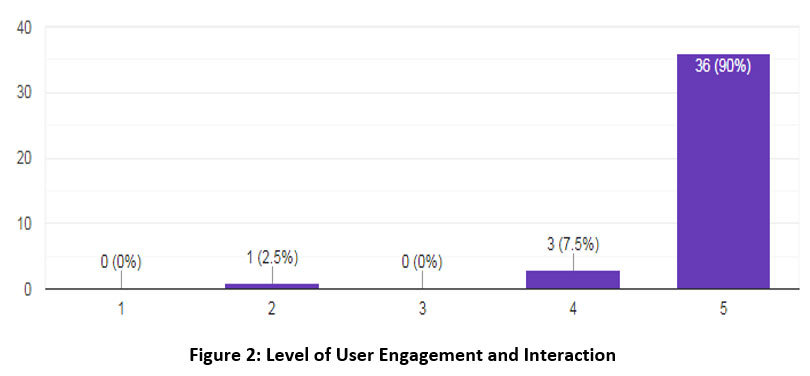 | Figure 2: Level of User Engagement and Interaction |
Figure 2 on Level of User Engagement and Interaction shows that 90% of the digital marketers say that the level of user engagement and interaction is very high using Meta Ads Campaign.
Frequency of using Meta Ads Campaign for Content Promotion
Meta Ads campaigns provide robust options for promoting content, enabling marketers to expand their reach and successfully engage with their intended audience. Meta Ads offer a flexible platform to display important material, such as blog entries, articles, videos, or other types of media, to a broad and relevant audience.
 | Figure 3: Frequency of using Meta Ads Campaign for Content Promotion |
Figure 3 on Frequency of using Meta Ads Campaign for Content Promotion show that 85.7% of the respondents use Meta Ads Campaign daily for the promotion of Services and Products.
Meta Ads Campaign Sample Reading of Company Page
 | Figure 4: Meta Ads Campaign Sample Reading of Company Page Click here to view Figure |
Figure 4 is the histogram of Age and Gender of Meta Ads Campaign Sample Reading of Company which shows that most of the Followers fall under the 74.90% Men and 25.10% female.
Location Details of Leads from Meta Ads Campaign
Location Details of leads has been captured in Table 2 while running the Ads campaign. Marketers may make their ads more relevant to local cultures, languages, and preferences by learning where their leads are located. The result is a rise in engagement and conversion rates as the relevancy of the company's adverts is enhanced. Marketing budgets can be more wisely distributed if we know which places produce the highest quality leads. Spending more money on high-performing sectors and less on low-performing ones is an option for marketers.
Table 2: Location Details of Leads from Meta Ads Campaign
Sl No | Location | No of Leads |
1 | India | 564 |
2 | Bangladesh | 13 |
3 | Malaysia | 8 |
4 | Singapore | 5 |
5 | Afghanistan | 1 |
6 | Myanmar (Burma) | 3 |
Table 2 of Location of Leads shows that 564 Followers are from India, 13 from Bangladesh and rest from other parts of the world.
Meta Ads Campaign Reach and Engagement metrics
When it comes to Meta (Facebook) Ads campaigns, the metrics of reach and engagement are crucial for assessing the effectiveness and influence of your advertising endeavours. Reach is the cumulative count of distinct individuals who have viewed your advertisement at least once. It offers a distinct measure of the extent to which your campaign has been seen and aids in evaluating the potential audience that your message has reached. High reach figures indicate that your advertisement is being viewed by a large and diverse audience, which is crucial for establishing brand recognition and increasing visibility. Conversely, engagement metrics, encompassing activities like likes, comments, shares, clicks, and other interactions, provide more profound insights into how consumers are engaging with your content. High engagement signifies that your advertisement is effectively connecting with the audience, motivating them to actively interact with your company.
Post Insights
This sub-section discusses the post insights with an overview of total insights. These parameters are also important for moving further with the research study.
Total Insights
 | Figure 5: Meta Ads Campaign Reach and Engagement metrics |
From the Figure 5 Content Analysis researcher finds that the impression on the post was 326, the post reach volume was 278 and the 15 leads were engaged with the post which says there is high chance of Lead Conversion that will generate the business revenue. The Leads are organic Leads.
Engagement Metrics
Engagement metrics in Meta Ads campaigns are crucial indicators of the effectiveness of your adverts in connecting with your audience and the extent to which they encourage engagement. These analytics encompass a range of user actions, including likes, shares, comments, saves, link clicks, and video views. Significant levels of engagement indicate that your content is effectively reaching your intended audience and motivating them to actively connect with it, indicating a successful match with their interests and requirements.
 | Figure 6: Engagement metrics |
If the Content is make as paid ads campaign the reach and impression will be more. The Same Post gets converted to paid Ads the increase in the engagement and reach is shown below.
Engagement metrics within Meta Ads Manager campaigns to gauge the level of user interaction and assess the platform's role in fostering meaningful engagement.
Engagement metrics in Meta Ads Manager campaigns are crucial for measuring user involvement and evaluating the platform's contribution to promoting meaningful engagement. These metrics comprise a range of user activities in response to an ad, such as likes, comments, shares, responses, link clicks, video views, and other similar actions. High levels of engagement suggest that the advertisement content is captivating and effectively connects with the audience, motivating them to engage in meaningful interactions. Click-through rates (CTR) and video completion rates are valuable metrics that provide insights into the effectiveness of an ad in driving traffic to the intended destination and capturing viewer attention, respectively.
 | Figure 7: Engagement metrics within Meta Ads Manager campaigns |
The above results in Figure 7 states that the particular post was converted to paid Ads campaign and the digital marketer set a budget of Rs 700 for the duration of 5 days. The objective of the marketer was to get more website visitors. The post got reached to 23,087 people and the cost per link click was 1.91. Around 367 people clicked the link and 384 people are engaged with the post.
Paid Ads Reach Graphical Presentation
When it comes to paid ads on Meta (formerly Facebook), the reach metric measures the total number of unique users who have viewed your advertisement at least once. Understanding this metric is essential for gauging the reach of your campaign and its effectiveness in engaging a broad audience. Ensuring a wide reach is crucial for brand awareness campaigns, as it shows that your message is reaching a diverse range of potential customers.
Figure 8 of paid Ads Reach shows that 84.8% of the audience are men and rest are females.
 | Figure 8: Paid Ads Reach Graphical Presentation |
Impression Based on Mobile Video Content, Stories and Articles
Measuring impressions in Meta (formerly Facebook) Ads campaigns, particularly those focused on mobile video content, stories, and articles, is crucial for evaluating the reach and visibility of your ads. Every time your ad appears on a user's screen, it is considered an impression, regardless of whether it is clicked. Impression counts are a key indicator of successful ad content, showing that it's effectively reaching users, boosting awareness, and brand recall.
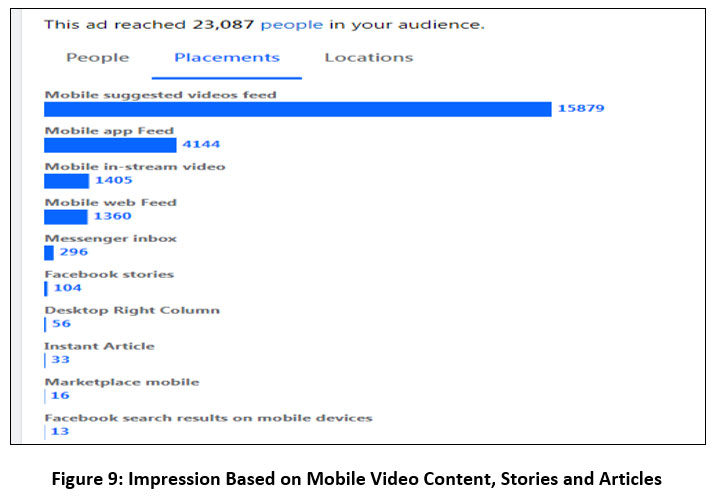 | Figure 9: Impression Based on Mobile Video Content, Stories and Articles |
Figure 9 on Impression Based on Mobile Video Content, Stories and Articles shows that People use to prefer video ads content in social media for better understanding of the products and services.
Locations of the Leads within India
It is essential to comprehend the demographic location in India for lead generation in Meta Ads campaigns in order to customise efficient marketing methods. India, characterised by its extensive and varied population, offers distinctive prospects and difficulties for advertisers. Through the analysis of location-specific data, organisations may pinpoint places that have the most potential for generating high-quality leads. Furthermore, the utilisation of location data aids in the optimal allocation of budgets, allowing for the strategic allocation of additional resources to locations with a greater potential for lead conversion.
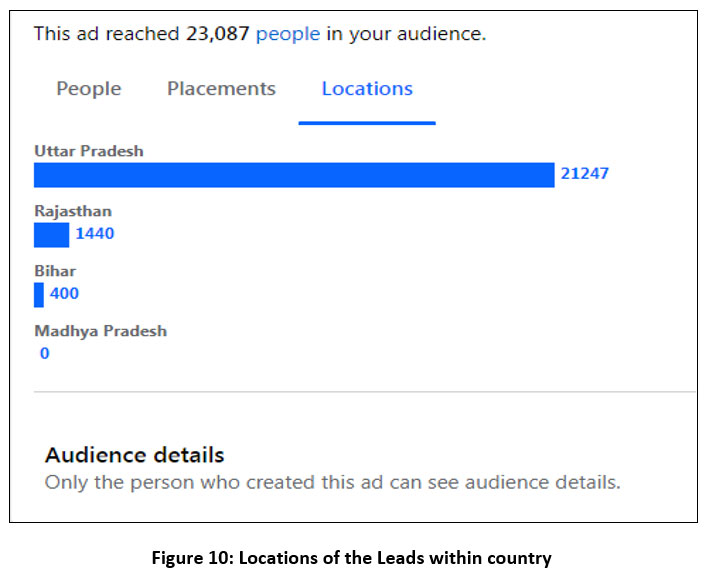 | Figure 10: Locations of the Leads within country |
Figure 10of Leads Location shows that Leads are mostly from Uttar Pradesh followed by Rajasthan and Bihar. The location is based on the selection of Target audience.
Factors on Meta ads Campaign Manager in terms of Content Marketing
The efficacy of Meta Ads Campaign Manager in content marketing is mostly contingent upon two essential factors: high-quality content and visual engagement. High-quality content is essential for a successful advertising campaign, since it guarantees that the message conveyed is valuable and pertinent to the intended audience. However, visual engagement is essential for attracting attention in the rapidly changing digital landscape. The Meta Ads Campaign Manager enables advertisers to integrate rich media formats, such as images, videos, and interactive components, to enhance the appeal and memorability of advertisements. Visually striking graphics not only attract visitors but also communicate messages more efficiently, making intricate material easier to understand.
 | Figure 11: Factors of Content Marketing |
Reliability Analysis
In statistics, a reliability test is employed to evaluate the consistency or stability of a measurement instrument, such as a test, survey, or other tool used for data collecting. Dependable devices yield consistent outcomes when subjected to consistent circumstances.
Table 3: Reliability Analysis
Factors | Cronbach’s Alpha Value | Status |
Quality Content | 0.955 | Reliable |
Visual Engagement | 0.942 | Reliable |
The Cronbach’s Alpha values of both the factors are 0.955 and 0.942 which proves that the factors are reliable.
Chi-Square Test
The Chi-square test is a statistical technique utilised to analyse the relationship between categorical variables. The Chi-square test encompasses two primary categories: the Chi-square test of independence and the Chi-square goodness-of-fit test. The Chi-square test of independence assesses if there is a statistically significant association between two categorical variables in a contingency table, which presents the frequency distribution of the variables. The test establishes the statistical significance of any deviations by comparing the observed frequencies in the table to the frequencies that would be predicted if the variables were independent. The Chi-square goodness-of-fit test evaluates whether the observed frequency distribution of a single categorical variable conforms to a predicted distribution. This is very beneficial for evaluating theoretical distributions. The Chi-square statistic is computed in both tests by adding the squared deviation between observed and predicted frequencies, divided by the expected frequencies. Subsequently, the obtained value is juxtaposed with a critical value retrieved from the Chi-square distribution table, taking into account the degrees of freedom and the required level of significance. If the calculated Chi-square statistic surpasses the critical value, the null hypothesis (which assumes no connection or adequacy) is rejected, indicating a notable correlation or an inadequate fit. The Chi-square test is extensively utilised in many disciplines such as social sciences, biology, and marketing to examine categorical data and make deductions about population attributes.
Ho1: There is no significant relationship between Quality content and content Marketing.
Ho2: There is no significant relationship between Visual Engagement and content Marketing.
Table 4: Chi-Square Tests
Value | Df | Asymptotic Significance (2-sided) | |
Pearson Chi-Square (Ho1) | 38.697a | 9 | .000 |
Pearson Chi-Square (Ho2) | 80.982a | 9 | .000 |
Based on the findings in Table 4, the researcher determined that all of the hypotheses were statistically significant. The values for all of the hypotheses were 0.000, which is lower than the p-value threshold of 0.05. Therefore, all of the hypotheses were included in the study.
Model Fit Summary and Regression Analysis
The primary objective of regression analysis is to establish a mathematical model that represents the relationship between variables and utilise it to forecast or elucidate the dependent variable using the values of the independent variables.
Table 5: Model Summaryb
Model | R | R Square | Adjusted R Square | Std. Error of the Estimate | Durbin-Watson |
1 | .828a | .686 | .684 | .477 | 1.625 |
Table 5 and 6 shows that R square value of 0.686 along with the significance level of 0.000 (p<=0.05). It shows that around 69% of the variance was explained by all the two variables and all these two variables were significant since the significance value of 0.000 (p <=0.05). These results were justifying the validity of regression analysis for this research work and hence final results could be considered for declaring the results. The Durbin – Watson value is 1.625 which shows that there is no co linearity.
Table 6: ANOVA
Model | Sum of Squares | df | Mean Square | F | Sig. | |
1 | Regression | 256.409 | 2 | 128.205 | 563.746 | .000b |
Residual | 117.574 | 517 | .227 | |||
Total | 373.983 | 519 | ||||
Table 7: Coefficientsa
Model | Unstandardized Coefficients | Standardized Coefficients | T | Sig. | ||
B | Std. Error | Beta | ||||
1 | (Constant) | .249 | .123 | 2.025 | .043 | |
Quality Content | .307 | .034 | .279 | 8.936 | .000 | |
Visual Engagement | .664 | .033 | .628 | 20.132 | .000 | |
Dependent Variable: Content Marketing.
Table 7 shows that significance value Quality Content and Visual Engagement is 0.000 (p<=0.05) which shows all these two factors are having strong influence Content Marketing.
Findings and Discussion
The findings and discussion are sub-divided into various sub-sections for the purpose of better understanding among the readers.
Impact on Content Reach
Finding: Meta Ads Manager significantly contributes to expanding content reach, with a notable increase in the number of impressions and visibility across diverse audience segments.
Discussion: The platform's advanced targeting capabilities enable advertisers to tailor content to specific demographics, ensuring a broader and more relevant reach. This aligns with the idea that precise targeting enhances the likelihood of content being seen by the right audience.
Engagement Metrics Analysis
Finding: Meta Ads Manager campaigns exhibit high engagement metrics, including increased likes, shares, comments, and click-through rates.
Discussion: The interactive nature of content delivered through Meta Ads Manager fosters meaningful engagement. Users are not just viewing but actively participating, suggesting that the platform serves as a catalyst for audience interaction and brand affinity.
Conversion Rates and ROI
Finding: Meta Ads Manager campaigns demonstrate favourable conversion rates and a positive return on investment.
Discussion: The ability to track and measure conversion metrics enables businesses to assess the direct impact of their advertising efforts. This insight is vital for optimizing campaigns and allocating budgets effectively, ultimately contributing to online success.
User Satisfaction and Perception
Finding: Users express a generally positive perception of ads delivered through Meta Ads Manager, citing relevance and non-intrusiveness.
Discussion: Positive user sentiment indicates that advertisers are successfully aligning their messages with user expectations. This fosters a positive brand perception and may contribute to long-term customer loyalty.
Quality Content and Visual Engagement
Findings: Both the variables are having strong influence on the content marketing in Meta Ads Campaign.
Discussion: The importance of high-quality content cannot be overstated in content marketing, particularly in Meta Ads campaigns. Top-notch content not only grabs the audience's attention but also establishes trust and credibility, which are crucial for cultivating enduring customer connections. High-quality visuals, including as images, films, infographics, and animations, can effectively and succinctly convey complex messages, creating a lasting impact and enhancing the overall efficacy of the campaign.
Managerial Implications
The research findings on the pivotal role of Meta Ads Manager in elevating content reach and engagement for market penetration have profound managerial implications for businesses seeking online success. Firstly, marketing managers should recognize the strategic significance of Meta Ads Manager as a powerful tool for targeted content delivery. The platform's advanced targeting features necessitate a meticulous approach to audience segmentation, urging managers to invest time and resources in understanding and categorizing their audience. This implies a shift from broad marketing strategies to more nuanced and personalized approaches, where content is tailored to resonate with specific demographics, thereby maximizing the potential for reaching and engaging the right audience.
Furthermore, the high engagement metrics observed in Meta Ads Manager campaigns underscore the importance of adopting an interactive and participatory content strategy. Marketing managers should prioritize the creation of content that not only informs but actively involves users. This could involve incorporating interactive elements such as polls, quizzes, and contests into campaigns to enhance user engagement. The implication here is that managers need to foster a culture of creativity and innovation within their marketing teams to consistently produce content that captivates and resonates with the target audience.
In comparison to traditional online advertising, the research implies a re-evaluation of budget allocation and overall marketing strategies. Marketing managers should consider reallocating resources from conventional channels to Meta Ads Manager, recognizing its proven effectiveness in delivering targeted and engaging content. This shift necessitates a strategic realignment of marketing budgets and the adoption of a more dynamic and adaptive marketing strategy that capitalizes on the strengths of Meta Ads Manager.
Understanding user behaviour and preferences on the Meta platform offers a strategic advantage for marketing managers. This insight should guide content creation strategies, encouraging managers to stay attuned to the evolving dynamics of user interaction within the platform. Regular analyses of user feedback and engagement patterns become essential, enabling managers to refine content strategies iteratively and ensure ongoing alignment with the preferences of the platform's user base.
Moreover, the research underscores the importance of measuring conversion rates and return on investment. Marketing managers should establish clear KPIs (Key Performance Indicators) aligned with business objectives, enabling them to assess the impact of Meta Ads Manager campaigns on actual business outcomes. This data-driven approach empowers managers to make informed decisions, optimizing campaign strategies for improved conversion rates and ensuring that marketing efforts contribute meaningfully to overarching business goals.
Recognizing and addressing challenges such as ad fatigue, privacy concerns, and algorithmic shifts emerges as a crucial managerial implication. Proactive strategies, including regular updates to creative content, robust privacy policies, and adaptability to algorithm changes, are imperative for sustaining the effectiveness of Meta Ads Manager campaigns. Managers need to foster a culture of agility and responsiveness within their teams to navigate challenges effectively and maintain campaign efficacy over time.
Compelling content distinguishes itself in the congested digital world, guaranteeing that the advertisement connects with the intended audience. This increased relevance enhances the rates at which users engage with the content, resulting in higher rates of clicking through and converting. Moreover, high-quality content improves the overall user experience by offering valuable, informative, and captivating material that fulfils the audience's requirements and preferences. Additionally, it enhances SEO (Search Engine Optimization) ranks, hence boosting the organic visibility of the advertisements. Through the constant delivery of quality information, brands have the opportunity to establish themselves as industry thought leaders, which can ultimately lead to increased brand loyalty and advocacy. Essentially, high-quality content is essential for achieving success in Meta Ads campaigns, since it has a significant impact on every step of the client's journey, including raising awareness, driving conversions, and ensuring customer retention. Further aspects of healthcare, wellness, and well-being can be a cherry on the cake.
Visual engagement is an essential element of content marketing, especially for Meta Ads campaigns. In an era characterised by the overwhelming influx of information, anything that is visually appealing has the ability to swiftly and efficiently captivate readers' attention. Visuals of superior quality, such as photographs, films, infographics, and animations, have the ability to effectively and concisely communicate intricate messages, leaving a lasting impression and amplifying the overall effectiveness of the campaign. The brain processes visual content more rapidly, increasing the likelihood of generating an immediate emotional reaction and a lasting impact. It is essential for Meta Ads to distinguish themselves in a rapidly scrolling feed. Moreover, content that is visually captivating tends to attract more attention and interaction, such as likes, shares, and comments, hence increasing the reach and efficacy of the campaign. Furthermore, consistent and visually attractive images aid in developing a robust brand identity, leading to improved brand recall and awareness. To summarise, visual engagement is essential for capturing attention, promoting interaction, and enhancing the overall effectiveness of Meta Ads campaigns. It is a crucial component of content marketing that cannot be overlooked. Moreover, during the trying times of the Coronavirus crisis social media played a big role because there was a rapid rise in the usage of social networking platforms during the COVID-19 pandemic. (Sengupta & Vaish, 2022; Sengupta et al., 2024; Singh et al., 2024). It also helped in maintaining the users’ healthcare and social distancing norms along with travel restrictions (Sengupta & Vaish, 2023).
Conclusion
Meta Ads Manager's advanced targeting features enable businesses to finely tailor their content delivery, ensuring it resonates with specific demographics. This precision addresses the challenge of reaching the right audience, providing a strategic advantage in a crowded digital space. The shift towards personalized and targeted strategies signifies a departure from conventional, broad-reaching methods, underlining the need for businesses to invest in a deeper understanding of their audience.
Moreover, the observed high engagement metrics within Meta Ads Manager campaigns emphasize the platform's effectiveness in fostering interactive and participatory user experiences. This presents an opportunity for businesses to not only disseminate information but actively engage with their audience, building a sense of community and brand loyalty. The implication here is a call for marketing teams to cultivate creativity and innovation, ensuring that content remains dynamic and captivating.
Comparatively, the research suggests a reconsideration of marketing budgets, urging a reallocation of resources from traditional channels to Meta Ads Manager. This shift acknowledges the platform's proven ability to deliver targeted and engaging content, requiring marketing strategies to become more adaptive and responsive to the changing dynamics of online advertising. Understanding user behaviour and preferences on the Meta platform emerges as a key takeaway. Analyzing the human behavioral patterns for overall improvement of health and satisfaction of the consumers is a key concern to be focussed upon. This knowledge should guide content creation strategies, prompting marketers to stay attuned to the evolving patterns of user interaction. The implication is that marketing approaches need to be iterative and data-driven, evolving with the preferences and behaviours of the platform's user base.
The emphasis on measuring conversion rates and return on investment underscores the need for a results-oriented approach. Marketing managers should establish clear metrics aligned with business objectives, enabling them to assess the tangible impact of Meta Ads Manager campaigns on overall business success. This data-driven approach facilitates strategic decision-making, ensuring that marketing efforts contribute meaningfully to organizational goals.
Acknowledgment
The authors extend appreciation to the entire research team for their collaboration and meaningful contributions to various aspects of this research study. Their diverse perspectives and expertise enriched this study.
Funding Sources
The author(s) received no financial support for the research, authorship, and/or publication of this article.
Conflict of Interest
The authors do not have any conflict of interest.
Data Availability Statement
This statement does not apply to this article.
Ethics Statement
This research did not involve human participants, animal subjects, or any material that requires ethical approval.
Informed Consent Statement
This study did not involve human participants, and therefore, informed consent was not required
References
- Kaplan, A. M. & Haenlein, M. (2010). Users of the world, unite! The challenges and opportunities of Social Media. Business Horizons, 53(1), 59-68.
- Chaffey, D., Chadwick, F., Mayer, R., & Johnston, K. (2016). Digital marketing: Strategy, implementation, and practice (6th ed.). Pearson Education Limited.
- Smith, P. R. & Chaffey, D. (2005). Digital Marketing Excellence: Planning, Optimizing and Integrating Online Marketing. Butterworth-Heinemann.
- Godin, S. (2008). Tribes: We need you to lead us. Penguin.
- Pulizzi, J. (2014). Epic Content Marketing: How to Tell a Different Story, Break through the Clutter, and Win More Customers by Marketing Less. McGraw-Hill Education.
- Alalwan, A. A., Rana, N. P., Dwivedi, Y. K., & Algharabat, R. (2017). Social media in marketing: A review and analysis of the existing literature. Telematics and Informatics, 34(7), 1177-1190.
- Dunn, J. (2016). Content Marketing Metrics: How to Measure the Success of Your Content Strategy. Retrieved from https://blog.hubspot.com/marketing/content-marketing-metrics
- Kumar, V. &Pansari, A. (2016). Competitive advantage through engagement. Journal of Marketing Research, 53(4), 497-514.
- Chaffey, D. & Smith, P. R. (2017). Digital marketing excellence: Planning, optimizing and integrating online marketing. Routledge
- Demers, J. (2019). The Complete Guide to Content Marketing for SEO. Retrieved from https://www.searchenginejournal.com/seo-guide/content-marketing-strategy/
- Sengupta, S. & Vaish, A. (2022). A Study on Social Networking Platforms in Higher Education Institutions. Academy of Marketing Studies Journal, Volume 26, Issue 3
- Sengupta, S. & Vaish, A. (2023). A study on social media and higher education during the COVID-19 pandemic. Universal Access in the Information Society, Special Issue
- Hajli, M. N. (2014). A study of the impact of social media on consumers. International Journal of Market Research, 56(3), 387-404.
- Evans, D., & McKee, J. (2010). Social media marketing: An hour a day. John Wiley & Sons.
- Liang, T. P., & Turban, E. (2011). Introduction to the special issue social commerce: A research framework for social commerce. International Journal of Electronic Commerce, 16(2), 5-14.
- McElfresh, J. A., & Holt, K. J. (2017). Landing page optimization: The definitive guide to testing and tuning for conversions. John Wiley & Sons.
- Rosen, D. (2012). Convert!: Designing Web Sites to Increase Traffic and Conversion. John Wiley & Sons.
- Turban, E., Strauss, J., Lai, L., & Taylor, R. (2018). Social Commerce: Marketing, Technology and Management. Springer.
- Altimeter. (2020). The State of Digital Marketing. Retrieved from https://www.prophet.com/perspectives/2020-state-of-digital-marketing/
- Nielsen Norman Group. (2019). Designing Visual Hierarchy: 6 Fundamentals Every Designer Should Know. Retrieved from https://www.nngroup.com/articles/visual-hierarchy-design/
- Liu, Y., Huang, J., An, S., & Liu, Q. (2017). A/B Testing in Online Advertising: Evidence from a Field Experiment on Facebook. Marketing Science, 36(3), 375-396.
- Singh, N., Sengupta, S. & Vaish, A. (2024). A Study on Social Media and Gig Economy in Higher Education Institutions during COVID-19 Pandemic. Academy of Marketing Studies Journal, Volume 28, Issue 6
- Sengupta, S., Singh, N. & Vaish, A. (2024). Women and Information Technology: A COVID-19 Pandemic Perspective. Academy of Marketing Studies Journal, Volume 28, Special Issue 6
- Sengupta, S. & Vaish, A. (2020). Social networking mood recognition algorithm for conflict detection and management of Indian educational institutions. Social Network Analysis and Mining. 10, 89, Springer Nature
- Datta, A., Dutta, S., Santhanam, G., Sengupta, S. & Arivazhagan, R. (2024). Leveraging LinkedIn Networking Tools for Optimal Talent Acquisition in the Banking Industry: A Conceptual Study. Journal of Business Strategy Finance and Management, 5(2)

This work is licensed under a Creative Commons Attribution 4.0 International License.