Accounting Information Systems and Management Decision Making: An Empirical Analysis of Microfinance Institutions
Kedze Fidelis Mua* 
1Faculty of Economics and Management Sciences, The University of Bamenda, Cameroon .
This study examines the role of accounting information in enhancing management decision-making within organizations in Bamenda, Cameroon. Data were collected from 40 organizations using both primary and secondary sources and analyzed using descriptive and inferential statistics, with regression analysis serving as the primary inferential technique. The primary objective of this research is to explore how accounting information impacts decision-making. Additionally, the study examines the relevance of information technology (IT) infrastructure and the effects of internal control on decision-making. Through a comprehensive analysis of these interconnected aspects, this study aims to provide valuable insights into the effective utilization of accounting information in organizational decision-making processes. The findings reveal a significant positive impact of accounting software on management decision-making. However, while internal control showed a positive relationship with decision-making, its effect was not statistically significant. Similarly, information technology infrastructure had a negative but statistically insignificant impact on decision-making within the scope of this study. These results underscore the critical role of accounting information, particularly accounting software, in enhancing decision quality. The study recommends mandatory training programs for accounting software utilization, integration of data analytics tools, and stringent data security measures to maximize the benefits of accounting information for decision-making.This study is vital to microfinance institutions and developing economies, where efficient decision-making and financial transparency are vital for sustainability. By demonstrating that accounting information particularly through the use of accounting software significantly enhances managerial decisions, the research highlights how technology-driven accounting systems can strengthen operational efficiency, accountability, and resource allocation. This provide guidance for improving financial management capacity, supporting regulatory compliance, and fostering transparency, all of which are essential for promoting financial inclusion and sustainable economic growth.
Copy the following to cite this article:
Mua K. F. "Accounting Information Systems and Management Decision Making: An Empirical Analysis of Microfinance Institutions" Journal of Business Strategy Finance and Management, 8(1).
Copy the following to cite this URL:
Mua K. F. "Accounting Information Systems and Management Decision Making: An Empirical Analysis of Microfinance Institutions" Journal of Business Strategy Finance and Management, 8(1). Available here: https://bit.ly/4mHHCuX
Citation Manager Publish History



Introduction
In today’s increasingly complex and competitive business environment, accounting information serves as a cornerstone for effective managerial decision-making. Organizations of all sizes depend on reliable and timely financial data to make strategic, tactical, and operational decisions. Within this landscape, microfinance institutions (MFIs) occupy a unique position. Unlike conventional financial institutions, MFIs pursue dual objectives: ensuring financial sustainability while fulfilling their social mission of extending credit and financial services to low-income populations. To achieve this delicate balance, MFIs must rely on accurate, relevant, and timely accounting information to guide decisions related to lending policies, resource allocation, risk management, and performance evaluation.
The Accounting Information System (AIS) provides the structural foundation through which financial data are collected, processed, and reported. An effective AIS not only ensures transparency and accountability but also enhances decision quality by supplying managers with actionable insights. For MFIs, this is particularly critical given their exposure to credit risk, operational inefficiencies, and regulatory scrutiny. Sound accounting information enables management to monitor loan portfolios, assess borrower performance, and identify potential default patterns. Furthermore, it assists in aligning financial decisions with institutional goals, thereby promoting sustainability and stakeholder confidence.
Accounting information is meaningful only when it is reliable, relevant, and understandable to its users. Management accounting, in particular, integrates financial and non-financial information to support internal planning, control, and performance measurement. In the context of MFIs, management often faces challenges such as fluctuating cash flows, high transaction costs, and the need to balance social impact with profitability. High-quality accounting information therefore becomes indispensable in determining the optimal pricing of loans, evaluating branch performance, managing liquidity, and ensuring compliance with financial regulations.
However, despite the recognized importance of accounting information, its effective utilization in managerial decision-making remains limited in many microfinance institutions. Several barriers contribute to this gap. These include inadequate training and technical competence of staff, poor system integration, insufficient investment in information technology, and a lack of appreciation of accounting information as a strategic resource. In some cases, data are collected but not analyzed effectively, resulting in decisions based on intuition rather than evidence. The consequences of such inefficiencies are severe, ranging from poor credit management and liquidity crises to eventual institutional failure.
Technological advancements have significantly transformed accounting practices, improving the accuracy, speed, and accessibility of financial data. The adoption of computerized AIS has enabled MFIs to streamline record-keeping, automate reporting, and enhance audit trails. Nevertheless, the mere presence of technology does not guarantee improved decision-making. The effectiveness of AIS depends on data quality, user competence, and management’s willingness to integrate accounting insights into strategic deliberations. Institutions that fail to leverage their accounting systems risk losing competitiveness, misallocating resources, and undermining investor and donor confidence.
Given these realities, understanding the role of accounting information in enhancing management decision-making within MFIs is both timely and significant. It provides a basis for improving operational efficiency, ensuring transparency, and strengthening governance structures. Moreover, as MFIs operate within volatile socio-economic and political environments, effective use of accounting information can help mitigate risks, anticipate financial pressures, and support evidence-based policy formulation. Therefore, this study investigates and addresses the challenges and barriers that impede the effective use of accounting information as a tool for management decision-making in organizations.
The main research question guiding this study is: "What is the significance of accounting information and software on management decision making?". To address this, specific research questions include:
What is the effect of accounting software on management decision making in an organization?
How does internal control affect management decision making in an organization?
What is the relevance of information technology on management decision making in an organization?
The purpose of this study is to establish the significance of accounting information and software as a tool for management decision-making. The subsidiary objectives are:
To examine the effect of accounting software on management decision making in an organization.
To find out the influence of internal control on management decision making in an organization.
To assess the relevance of information technology on management decision making in an organization.
Literature Review
The function of accounting, as defined by the American Institute of Certified Public Accountants (1970), is to provide quantitative, primarily financial, information about economic entities to aid in economic decision making. Modern accountants are concerned with planning, problem solving, control, evaluation, and auditing. Accounting information ultimately serves the needs of both internal and external users.
Management accounting concerns information used mainly by those within the business organization. Financial accounting information is used by external parties. The ultimate justification for accounting information lies in its usefulness for specific objectives.
Bookkeeping is the recording of financial transactions and is part of the process of accounting. It involves systematic recording, organizing, and storing financial transactions as a basis for accounting and financial reporting (Hoskin and Macve, 2000). While bookkeeping is a mechanical part, accounting encompasses system design, analysis, interpretation, and utilization of information (Chris, 1990). Good bookkeeping data is essential for accurate decision-making, profit maximization, and optimal resource usage. Hodggett (2012) conceptualizes bookkeeping data as financial information about economic activities, used for settling on financial decisions. Edwards (2012) defines accounting as identifying, measuring, recording, and conveying monetary information to allow informed decisions. The main purpose of bookkeeping is to enable people to settle on financial decisions about resource allocation. Bookkeeping information is sustenance for management planning and decision making (Fess and Niswonger, 2008).
McLeod & Schell (2020) define Information Technology (IT) as "the use of digital technology to store, process, manipulate, and communicate information electronically within an organization". Laudon and Laudon (2018) state IT is "the use of digital technology, including computers and telecommunications, to acquire, store, process, and distribute information". Turban, Pollard, and Wood (2017) define IT as "the technology that enables organizations to develop, manage, and operate computer-based information systems, and make use of applications and telecommunications technologies to process and transmit information".
The computer is an electronic device that can collect, organize, store and communicate vast amounts of information with great speed. Accountants have been among the earliest and most enthusiastic users. Johnson (1999) stated "Computers are tool with which to calculate measure, assess, store, retrieve, regulate and Monitor information". Before computers, financial reports often took months to produce, now taking days or hours. Most large accounting operations are now computerized.
COSO defines Internal control as a process, effected by an entity's board of directors, management and other personnel, designed to provide reasonable assurance regarding the achievement of a firm's Objectives in the effectiveness and efficiency of operations, reliability of financial and management reporting, compliance with applicable laws, regulations and protect the Organization's reputation (Kaplan, 2008). An internal control system (ICS) is a collection of controls put in place by an organization. Internal controls became apparent at the beginning of 21st century following major corporate scandals (PABC 2006). The AICPA describes internal control as "a process that is designed to provide reasonable assurance regarding the achievement of objectives in areas such as financial reporting, Operations, and compliance with laws and regulations". Brink and Witt (2018) define internal control as "the system of policies, Procedures, practices, and organizational structures implemented to provide reasonable assurance that an organization's objectives are achieved efficiently and effectively". Kamau and Wachira (2016) view internal control as 'a set of measures put in place by management to prevent and detect fraud, errors, and irregularities'. The focus of internal control as a tool for management decision making includes risk management, performance evaluation, compliance assurance, and fraud prevention.
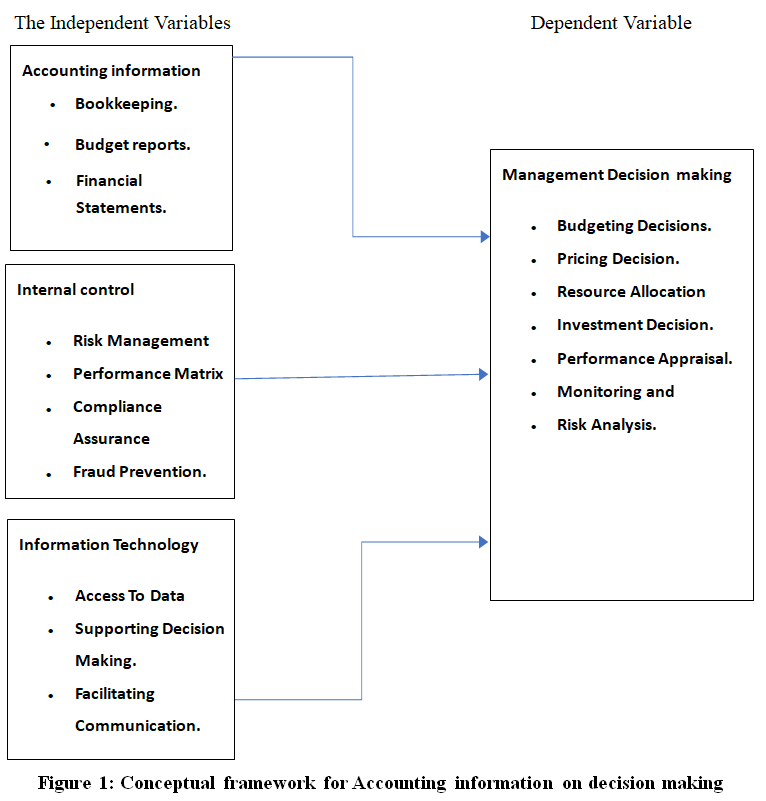 | Figure 1: Conceptual framework for Accounting information on decision making
|
An accounting and management information system (MIS) is a computerized system that integrates accounting and financial processes with management information to support decision-making and strategic planning. This system collects, stores, processes, and reports financial and non-financial data to help managers and other stakeholders in making informed decisions. The accounting component focuses on financial transactions and statement generation, while the management information component provides non-financial data to assist planning and operational decisions. Overall, an MIS plays a crucial role in providing accurate, relevant, and timely information for effective management and informed decision-making. Graham (1990) stated that "an investor has to take decision based on accounting information; enterprises (management) has to take operational and other decisions according to accounting information, banks have to take decisions on loans base on accounting information".
Many research have been carried out on the role of accounting information as a tool for management decision-making in organizations. However, there are very few studies that directly explore how accounting information is being utilized by managers in organizations in Bamenda to make strategic decisions, or how the quality of accounting information impacts decision-making processes in this setting. Additionally, there is insufficient research discussing the challenges and barriers faced by managers in Bamenda when using accounting information for decision-making purposes. Most research focus on only a single component of accounting information on decision making. This study brings out how Internal control, information technology and accounting information interacts with one another as well as their relationship in management decision making.
Materials and Methods
This section outlines the research conducted, providing insights into the target population, study locations, data collection methods, and data analysis approach.
Scope of Study
The study focuses on the significance of accounting information as a tool for management decision making in numerous organizations, especially financial Institutions under the CamCCUL network in Bamenda. There are more than 15 MFIs under this network in Bamenda, hence the target population comprises of these institutions. This study targets at least three staff members from some of the microfinance in the sample size.
Area of Study
The area of study for this research work is Bamenda, Cameroon, including its business organizations such as Microfinance Institutions. Bamenda is known for its rising business activities and hence, the need for accounting information for management decision making.
Research Design
A research design is a plan or strategy used to get the expected study results (Kothari, 2004). This study adopts case study design, commonly applied in field-based research to describe and develop knowledge from real-world conditions (Etiendem, 2019). Akhtar (2016) elucidates research design as a defined-layout that acts as a short plan for proposed research, organizing data assortment, measurement, and examination. This research design approach was primarily designed to determine the role of accounting information as a tool for management decision making in an organization. Primary data from questionnaires were analyzed using descriptive and inferential analysis methods.
Sample composition and sampling techniques
The study employed a stratified random sampling technique to ensure adequate representation of employees with different functional responsibilities. The population was stratified on a functional basis, namely accounting staff, managerial staff, and other operational staff involved in the use or interpretation of accounting information and software. At the initial stage, purposive (judgmental) sampling was used to identify employees with relevant knowledge and experience in accounting-related activities. Within each functional stratum, simple random sampling was then applied by compiling a list of eligible employees and selecting respondents randomly (e.g., through random number selection) so that each individual had an equal chance of being included. A total of 40 questionnaires were distributed proportionately across the functional strata, allowing for possible non-response. This sampling approach enhanced the relevance and reliability of the study findings.
Data were collected using a structured questionnaire divided into three sections: demographic information, accounting information systems and management decision making. The questionnaire was developed from relevant literature and adapted from previously validated scales. It was reviewed by academic and industry experts to ensure content validity and pilot-tested with five respondents to refine clarity and structure. The internal consistency of the items was assessed using Cronbach’s alpha, yielding a reliability coefficient of 0.82, indicating high reliability. This approach ensured that the data collected were both representative and reliable, providing a sound basis for analyzing the impact of accounting information on management decision-making within microfinance institutions.
Data Collection Method
Two methods were used: Primary and Secondary data.
Primary data: Primary data is gathered for the first time (Roston, 2001). Shortcomings of secondary data necessitated its use. Self-administered questionnaires were used, enabling coverage of a large population quickly and cost-effectively. Observations, interviews, and questionnaires were methods used. A questionnaire is a written list of questions answered by people to collect information (Chambers 20th century dictionary).
Secondary data: Secondary data is already available in the public domain (Krisluzaswami and Ranagnathan, 2006). Mass media like newspapers, magazines, Internet, publications, and journals were used.
Model Specification
The model portrays the relationship between the dependent and independent variable. The independent variables are accounting information, internal control and information technology while the dependent variable is management decision making. The model is presented below:

Where:
DM -the dependent variable, represents Management Decision Making
B0 = is a constant term
AI= Accounting Software (Independent Variable)
IC = Internal Control (Independent Variable)
IT = Information Technology (Independent Variable)
EX = Experience (Control Variable)
E = Error term
Method of Data Analysis
Linear regression was used to examine the effects of accounting information (AI), internal control (IC), information technology (IT), and experience (E) on Management Decision Making (DM). Regression analysis was chosen because decision making (DM) is a quantitative, continuous composite variable derived from respondents’ ratings on multiple indicators related to management decision quality, timeliness, and effectiveness. These indicators were measured using a Likert-scale instrument and aggregated to form an overall DM score, which allows for meaningful comparison across respondents. Assumptions of linearity, normality, homoscedasticity, independence of errors, and multicollinearity were checked using scatterplots, residual analysis, Durbin-Watson statistics, and Variance Inflation Factor (VIF) values.
Results
Out of 40 questionnaires administered, all 40 were returned (100% return rate). The study examined Accounting Information as a tool for management decision making.
Demographic information of respondents
Table 1: Demographic Information
Variable | Clasification | Frequency | Percentages |
Gender | Male Female | 23 17 | 57.5 42.5% |
Age of Respondents | <20 21-31 31-40 41-50 Missing | 7 10 12 3 8 | 17.5 25.0 30.0 7.5 20.0% |
Level of Education | GCEO/L GCE A/L HND/HPD BSC/BBA MSC/MBA PhD Other Qualifications | 3 5 8 15 5 2 2 | 7.5 12.5 20.0 37.5 12.5 5.0% 5.0% |
Work Experience | 0-5 6-10 10+ Missing | 27 10 2 1 | 67.5 25.0 5.0 2.5% |
Work Position | Manager Internal Controller Loan Officer Accountant Receptionist Cashier Others | 3 4 7 6 4 6 10 | 7.5 10.0 17.5 15.0 10.0 15.0 25.0% |
Table 1 reveals that 23 (57.5%) males and 17 (42.5%) females filled questionnaires. Age groups: 7 (<20 years, 17.5%), 10 (21-31 years, 25.0%), 12 (31-40 years, 30.0%), 3 (41-50 years, 7.5%), 8 (20.0%) missing. Education: 3 (7.5%) GCEO/L, 5 (12.5%) GCE A/L, 8 (20.0%) HND/HPD, 15 (37.5%) BSc/BBA, 5 (12.5%) MSc/MBA, 2 (5.0%) PhD, 2 (5.0%) other. Work experience: 27 (67.5%) 0-5 years, 10 (25.0%) 6-10 years, 2 (5.0%) 10+ years, 1 (2.5%) missing. Work positions: 3 Managers (7.5%), 4 Internal Controllers (10.0%), 7 Loan Officers (17.5%), 6 Accountants (15.0%), 4 Receptionists (10.0%), 6 Cashiers (15.0%), 10 Others (25.0%).
Inferential Statistics
Table 2: Summary Statistics
N | Minimu m | Maximu m | Mean | Std. Deviation | |
Management Decision Making | 40 | 3.20 | 5.00 | 4.4100 | .31688 |
Accounting Software | 40 40 | 3.25 | 5.00 | 4.3125 | .31900 |
Internal Control | 3.50 | 5.00 | 4.2051 | .37553 | |
Information Technology Infrastructure | 40 | 2.25 | 4.75 | 3.6500 | .48635 |
Work experience | 40 | 1 | 3 | 1.36 | .584 |
Valid N (listwise) | 38 |
Table 2 shows the mean for management decision making is 4.4100 (SD 0.31688). Accounting software mean is 4.3125 (SD 0.31900), and internal control mean is 4.2051 (SD 0.37553). Information technology infrastructure mean is 3.6500 (SD 0.48635). Work experience mean is 1.36 (SD 0.584).
Table 3: Pairwise Correlation Matrix
Management Decision Making | Accounting Software | Internal Control | Information Technology Infrastructure | Work experie nce | |
Management Decision Making | 1 | .514** | .299 | -.068 | .159 |
Accounting Software | .514** | 1 | .430** | .155 | -.090 |
Internal Control | .299 | .430** | 1 | .327* | -.043 |
Information Technology Infrastructure | -.068 | .155 | .327* | 1 | -.074 |
Work experience | .159 | -.090 | -.043 | -.074 | 1 |
Table 3 shows a low positive and negative correlation between the variables, with no very strong correlation observed.
Table 4: Model Fit
Model | R | R Square | Adjusted | R | Std. Error of the Estimate | Durbin- Watson |
1 | .594a | .353 | .275 | .27575 | 1.713 |
Predictors: (Constant), Work experience, Internal Control, Information Technology, Accounting Software
The model summary (Table 4) shows a multiple correlation coefficient (R) of 0.594, indicating a positive moderate relationship between independent and dependent variables. The adjusted R-squared of 0.275 means 27.5% of variations in Management decision making are explained by variations in accounting information.
Table 5: Regression Coefficients
Model | Unstandardized Coefficients | Standardized Coefficients | t | Sig. | |
B | Std. Error | Beta | |||
(Constant) Accounting Software Internal Control 1 Information Technology Work experience | 2.018 | .700 | 2.882 | .007 | |
.502 | .155 | .505 | 3.246 | .003 | |
.129 | .138 | .151 | .933 | .357 | |
-.125 | .097 | -.192 | -1.289 | .206 | |
.105 | .077 | .190 | 1.349 | .186 | |
The constant is 2.018, significant at 1% (Sig 0.007 < 0.1). Accounting software coefficient is positive (0.502), significant at 1% (Sig 0.003 < 0.01), indicating a unit increase leads to a 0.502-point increase in management decision making. Internal control coefficient is positive (0.129) but insignificant at 10% (Sig 0.357 > 0.1). Information technology infrastructure coefficient is negative (-0.125) but insignificant at 10% (Sig 0.206 > 0.1). Work experience coefficient is positive (0.105) but insignificant at 10% (Sig 0.186 > 0.1).
Discussion
The first objective of this study was to determine the significance of accounting information on management decision-making. Results show a positive and statistically significant relationship (coefficient = 0.502, Sig = 0.003 < 0.01), indicating that a one-unit increase in accounting software usage leads to a 0.502-point increase in management decision-making. This confirms that accounting information plays a critical role in enhancing managerial decision-making by providing timely and accurate financial data. Likewise, Ignatius, Nzioka, and Nyonje (2021) observed that accounting information significantly improves management decision-making among religious institutions in Kenya. These results align with Ngome (2017), who underscored the importance of accounting information for financial management and performance evaluation. In the microfinance context, this suggests that investing in robust accounting systems can directly improve decision quality, particularly in financial planning, reporting, and resource allocation.
The second objective examined the influence of internal control on management decision-making. The results reveal a positive but statistically insignificant relationship (coefficient = 0.129, Sig = 0.357 > 0.1). While internal control systems are designed to ensure the reliability and accuracy of information, their impact may not be immediately observable. Monteiro, Nunes, and Sousa (2021) found that internal control quality affects decision-making success mainly through improved financial information quality, while Boumzaid (2020) also reported a significant positive impact of internal control on decision effectiveness in Algerian firms. However, other studies such as Nguyen et al. (2018) on Vietnamese SMEs found that some elements of internal control had no significant effect on performance. These mixed findings may explain the insignificance observed in this study, possibly due to underutilization of controls, limited staff training, or delayed effects of control mechanisms on decision-making. For microfinance institutions, this implies that merely implementing controls is insufficient; these systems must be actively integrated into daily operations and supported by training to achieve meaningful improvements in management decision-making.
The third objective explored the effect of information technology (IT) infrastructure on management decision-making. Results indicate a negative and statistically insignificant relationship (coefficient = –0.125, Sig = 0.206 > 0.1). This unexpected negative effect may reflect challenges such as inadequate training, poor integration with existing processes, or system complexity that can initially slow decision-making. Tiwow, Lonto, and Tangkuman (2023) and Hutomo and Rofi (2022) both reported a significant positive influence of IT capability on strategic decision-making and organizational performance, while Tomie (2023) cautioned that IT implementation may lead to information overload, poor integration, or underutilization if not properly managed. Therefore, although theory and most studies expect a positive relationship, the current finding highlights the importance of implementation quality. In practice, microfinance institutions should complement IT investments with staff capacity building, proper system integration, and continuous technical support to ensure technology enhances rather than hinders decision-making.
The fourth objective was to assess the impact of work experience on management decision-making. The coefficient is positive (0.105) but statistically insignificant (Sig = 0.186 > 0.1), suggesting that while experience may theoretically enhance decision-making, its effect was not strongly observable in this study. Hermawan (2022) found that work experience significantly improves decision quality, whereas Gong et al. (2023) noted that experience can sometimes lead to overconfidence and biased decisions, moderating its overall effect. This mixed evidence implies that experience alone may not guarantee better decision outcomes, especially when not supported by accurate information and effective systems. Organizations should therefore combine experienced personnel with efficient accounting and IT tools to maximize decision-making outcomes. These findings emphasize that in microfinance institutions, investments should prioritize robust accounting systems while also ensuring proper implementation of controls, IT integration, and staff development. Together, these measures can strengthen management decision-making and improve organizational performance.
This study adopts a case study design, which limits the generalizability of its findings beyond the selected microfinance institutions. The small sample size of 40 MFIs may not fully represent the wider sector. Additionally, reliance on self-reported data introduces the possibility of response bias, as participants may have overstated their practices. Future studies could employ larger samples or comparative designs to enhance the validity and applicability of the results.
Conclusion
Based on this research work titled "The role of accounting information as a tool for management decision making", all the research objectives were targeted towards particular research questions, and all objectives were met. This study intended to find out the influence of Accounting Software, Internal Control, and Information Technology Infrastructure on management decision making.
The study adopted descriptive survey research design to establish the role of accounting information as a tool for management decision making. Primary data was collected through structured questionnaires from 40 respondents across microfinance institutions in Bamenda, Cameroon. Results indicate a positive and significant role of accounting software that improves management decision making, leading to the rejection of the first hypothesis.
Results from the regression analysis reveal a positive but insignificant effect of internal control on management decision making, leading to acceptance of the second hypothesis. Information technology infrastructure showed a negative and statistically insignificant effect, leading to acceptance of the third hypothesis. For control variables, work experience showed a positive but insignificant effect on management decision making.
The study contributes to the existing literature by providing empirical evidence of the differential impacts of various accounting information components on management decision-making. While accounting software demonstrates clear benefits, the results suggest that organizations should focus on comprehensive implementation strategies that address not just technology acquisition but also training, integration, and process optimization.
Recommendation
Mandatory Training and Education Programs for Accounting Software Utilization: Institutions should implement mandatory training and education programs focused on accounting software utilization for all relevant personnel within institutions. By mandating training programs on how to effectively use accounting software for decision-making purposes, institutions can ensure that employees are equipped with the necessary skills to maximize the software's benefits.
Integration of Data Analytics Tools with Accounting Software: Institutions need to integrate data analytics tools with accounting software to enable more advanced analysis and decision-making capabilities. By combining accounting data with other relevant data sources through analytics tools, institutions can gain deeper insights and make more informed decisions.
Stringent Data Security and Compliance Measures: Implement stringent data security and compliance measures to safeguard sensitive financial information stored in accounting software systems. By prioritizing data security and compliance measures, institutions can ensure the trustworthiness of their financial data and decision-making processes
Acknowledgement
The author would like to thank the University of Bamenda for supporting this research work. The Department of Banking and Finance is highly appreciated for allowing access to research facilities. The author is also profoundly grateful to all the microfinance institutions under the CamCCUL network in Bamenda for their cooperation during data collection. Special appreciation goes to all respondents who participated in this study by completing the questionnaires.
Funding Sources
The author(s) received no financial support for the research, authorship, and/or publication of this article.
Conflict of Interest
The authors do not have any conflict of interest.
Data Availability Statement
This statement does not apply to this article.
Ethics Statement
This research did not involve human participants, animal subjects, or any material that requires ethical approval.
Informed Consent Statement
This study did not involve human participants, and therefore, informed consent was not required.
Clinical Trial Registration
Not Applicable.
Permission to reproduce material from other sources
Not Applicable.
Author Contributions
The sole author was responsible for the conceptualization, methodology, data collection, analysis, writing, and final approval of the manuscript.
References
- Akhtar, I. (2016). Research design. In S. N. Haq (Ed.), Research in social science: Interdisciplinary perspectives (pp. 68-84). Global Vision Publishing House.
- Boumzaid, B. (2021). The Impact of Internal Control system according to COSO Framework on the Effectiveness of Decision-making: a case study at Fertial company-annaba in Algeria. Revue des Sciences Commerciales, 12(3), 784-804.
- Niswonger, C. R., & Fess, P. E. (2009). Accounting principles. South-Western Publishing.
- Gong, Z., Blettner, D. P., & Shaver, J. M. (2023). Unfinished business: Integrating individual decision-makers’ experience and incentives into organizational performance feedback theory. Frontiers in Psychology, 14, 166-185.
CrosssRef - Hermawan, E. (2022). The effect of experience, skill and environment on decision making (Literature review study). Dinasti International Journal of Management Science (DIJMS), 3(4), 732–741.
- Hoskin, K. W., & Macve, R. H. (2000). Knowing more as knowing less? Alternative histories of cost and management accounting in the U.S. and the U.K. Accounting Historians Journal, 27(2), 91-149. https://doi.org/10.2308/0148-4184.27.1.91
CrosssRef - Hutomo, P. T. P., & Rofi, A. (2022). Analysis of information quality, technology capability towards strategic decision making, and their effect on improving organizational performance. Academy of Strategic Management Journal, 21(5), 1–15.
- Igboke, S., & Ogbu, J. (2023). Extent of utilization of accounting information for management decision making by small scale business operators. European Journal of Education Studies, 10(4). DOI: http://dx.doi.org/10.46827/ejes.v10i4.4777
- Ignatius, R. N., Githui, T., & Gathaiya, R. (2021). Influence of accounting information on management decision-making among catholic religious communities in Karen Sub-County, Kenya. The Strategic Journal of Business & Change Management, 8(3), 1029-1038. DOI: https://strategicjournals.com/index.php/journal/article/view/2079
CrosssRef - Kaplan, R. S. (2008). Conceptual foundations of the balanced scorecard. Handbooks of Management Accounting Research, 3, 1253-1269. https://doi.org/10.1016/S1751-3243(07)03003-9
CrosssRef - Laudon, K. C., & Laudon, J. P. (2018). Management information systems: Managing the digital firm (15th ed.). Pearson.
- Lawal, B. (2019). Accounting Information and Managerial Decision Making in the Manufacturing Industry in Nigeria. Advances in Social Sciences Research Journal, 6(9), 143–155. DOI: https://doi.org/10.14738/assrj.69.6967
CrosssRef - Monteiro, A. P. M., Vale, J. A. M., Cepêda, C. L. M., & Leite, E. M. A. (2021). Internal control system quality and decision-making success: The role of financial information quality. Universal Journal of Accounting and Finance, 9(3), 285–294. https://doi.org/10.13189/ujaf.2021.090302
CrosssRef - Tomie, D. (2023). The role of information technology in decision-making: A literature review. Interdisciplinary Management Research Conference XIX Proceedings, 217–228.
- Turban, E., Pollard, C., & Wood, G. R. (2015). Information technology for management: Advancing sustainable, profitable business growth (10th ed.). John Wiley & Sons.

This work is licensed under a Creative Commons Attribution 4.0 International License.