Understanding Consumer Perception of halal foods: A Conceptual Framework Using the Stimulus-Organism-Response Model
Sakera Begum1*  , Mohammed Alamgir2 , Tanima Sharmin1 and Mohammad Tayub Chowdhury2
1School of Business, University of Creative Technology Chittagong, Chittagong, Bangladesh .
2Department of Marketing, University of Chittagong, Chittagong, Bangladesh .
http://dx.doi.org/10.12944/JBSFM.07.01.02
The global halal food market, valued at USD 1.91 trillion in 2023, reflects the growing intersection of religious adherence and consumer trust. In Muslim-majority countries like Bangladesh, consumers often assume that the food they consume is halal by default, given the strong religious identity of the population. However, issues such as food adulteration, fraudulent labeling, and inadequate certification systems raise concerns that consumers may unknowingly consume haram (forbidden) products, despite their confidence in the halal status of their food. This study investigates consumer perception in the halal food sector using the Stimulus-Organism-Response (S-O-R) framework, focusing on Bangladesh as a case study. The research addresses two key questions: (1) Which factors contribute to the development of consumer perception of halal food? and (2) How does the perception of halal influence the purchase intention of Muslim consumers in Bangladesh? Key constructs—knowledge, religious commitment, trust, and awareness—are examined as stimuli influencing perception, which mediates purchase intention. The findings reveal that these four factors contribute to shape the Muslim consumers’ consumer perception regarding halal food in Bangladesh, along existing literature examined the positive relationship between perception and purchase intention. By developing a conceptual framework, this research bridges gaps in existing theoretical models and offers actionable insights for policymakers and marketers to strengthen consumer confidence in halal products. The study contributes to the evolving discourse on Islamic marketing and provides a foundation for targeted strategies to improve market transparency and integrity.
Copy the following to cite this article:
Begum S, Alamgir M, Sharmin T, Chowdhury M. T. "Understanding Consumer Perception of halal foods: A Conceptual Framework Using the Stimulus-Organism-Response Model". Journal of Business Strategy Finance and Management, 7(1).
DOI:http://dx.doi.org/10.12944/JBSFM.07.01.02Copy the following to cite this URL:
Begum S, Alamgir M, Sharmin T, Chowdhury M. T. "Understanding Consumer Perception of halal foods: A Conceptual Framework Using the Stimulus-Organism-Response Model". Journal of Business Strategy Finance and Management, 7(1). Available here:https://bit.ly/44tPglz
Download article (pdf) Citation Manager Publish History



Introduction
Religion as a construct of culture influence consumer in purchasing decision particularly within the context of halal food consumption. According to Islamic law, which is based on principles laid out in the Quran (Al-Qaradawi, 2013; Shah Alam & Mohamed Sayuti, 2011), Muslims must adhere to strict dietary restrictions that go beyond mere personal taste. According to the Department of Islamic Development Malaysia (2005), these dietary laws help Muslim consumers stay in line with Shariah, which emphasizes the importance of halalness in everyday life. This has led to a meteoric rise for the worldwide halal food industry, which was valued at $1.91Trillion in 2023 and will reportedly reach $7.54Trillion by 2032, an increase of 16.5% CAGR (Expert Market Research, 2024).
Despite this growth, significant challenges persist in ensuring the integrity of halal food products, particularly in Muslim-majority countries like Bangladesh. Consumers in Bangladesh often assume that the food they consume is halal by default, given the country's strong religious identity. However, this confidence may be misplaced. Recent studies have highlighted issues such as food adulteration, fraudulent halal labeling, and inadequate certification systems, which raise concerns that consumers may unknowingly consume haram (forbidden) products (Rahman, 2021; Akter et al., 2021). For instance, incidents of porcine DNA found in confectionery products and the widespread use of harmful chemicals like formalin in food processing have eroded trust in the halal food supply chain (Rahman, 2017; Rahman et al, 2017; Ashraf, 2019). Despite these sensitive challenges Muslim consumers of Bangladesh are perceiving they are consuming halal throughout. These challenges underscore a critical gap between consumer perception and the reality of halal compliance. Hence this study wants to explore what factors actually shaping this positive perception among Muslim consumer of Bangladesh. These systemic issues necessitate a deeper understanding of how consumers form perceptions of halalness and how these perceptions influence their purchase intentions.
Consumer perception, defined as the process of organizing and interpreting external stimuli, plays a pivotal role in shaping purchasing decisions (Schiffman & Kanuk, 1997). It influences the relationship between external influences and consumer behavior, acting as a cognitive filter that determines how consumers evaluate products (Riaz, 2015). Consumer perception is influenced by a multitude of factors that shape how individuals view and interact with products. These factors encompass sensory characteristics, personal attributes, environmental influences, and marketing strategies. Sensory attributes, such as taste and quality, are pivotal in shaping consumer perception (Rai et.al, 2023; Tamilmani & Jeyalakshmi, 2020), while visual elements, including packaging design, color schemes, and branding, further enhance product appeal (Pellegrino, 2024). Personal characteristics, such as knowledge (Rai et al., 2023), social norms, family traditions, and ethical considerations, also significantly influence perception (Kumar et al, 2024). Environmental and economic factors, including food processing practices (Rai et al., 2023), rapid globalization, and changing lifestyles, exert additional influence (Rai et al., 2023). In the context of halal food, perception is shaped by various constructs, including knowledge, religious commitment, trust, and awareness, which collectively influence consumer confidence in product authenticity and compliance with Islamic dietary laws (Mukhtar & Butt, 2012; Ambali & Bakar, 2014). However, despite its critical role, the formation and implications of halal perception remain underexplored, particularly in theory-driven research.
Bangladesh, the third-largest Muslim-majority country with over 90% of its 174 million people adhering to Islam, presents a unique context for studying halal consumer behavior (World Population Review, 2024). Despite the population's high religious commitment, the halal food market faces significant challenges. Rampant adulteration, including the use of harmful chemicals such as formalin and carbide, erodes trust in the food supply chain and raises serious concerns about the integrity of halal certification (Rahman et.al, 2017; Rahman et.al, 2015). Furthermore, limited awareness of halal certification processes exacerbates the problem, leaving consumers reliant on superficial indicators such as Islamic symbols or Arabic-sounding names rather than verified certifications (Shafie & Othman, 2006).
The lack of a standardized halal certification system in Bangladesh further compounds these issues, creating uncertainty about product authenticity and compliance with Islamic laws (Ashraf, 2019). While consumers are increasingly aware of halal principles, they often lack the detailed knowledge required to make informed decisions. This gap between consumer expectations and the realities of the market underscores the importance of studying how perception is shaped by constructs such as knowledge, religious commitment, trust, and awareness. Understanding these dynamics can provide actionable insights for addressing consumer mistrust and improving market transparency.
Existing studies on halal consumer behavior have largely focused on purchase intention, often neglecting the antecedents and mediating role of perception (Mukhtar & Butt, 2012) While constructs such as trust and awareness have been studied individually, their combined influence on perception remains underexplored, particularly in South Asian contexts like Bangladesh (Said et.al, 2014; Rana, 2022). Moreover, most research adopts a descriptive approach, lacking the theoretical rigor required to develop comprehensive models for understanding consumer behavior. This gap calls for a theory-driven framework that integrates these constructs, providing a holistic understanding of how perception influences halal purchase intentions. Specifically, the study aims to answer the following research questions:
What factors are shaping the positive perception of halal food among Muslim consumers in Bangladesh?
Does the perception of halal influence the purchase intention of Muslim consumers?
Literature Review
Conceptualization of Halal Food
Halal (hal?l) signifies what is lawful or permissible under Islamic law, particularly in dietary practices outlined in the Quran and Hadith (Shah Alam & Mohamed Sayuti, 2011). The Quran commands, “O, ye men! Eat of what is in the earth, lawful and wholesome, and follow not the footsteps of Satan; for verily he is an open enemy to you” (Al-Baqara 2:168). It further establishes that all foods are halal except those explicitly prohibited as haram. Similarly, the Hadith clarifies, “Halal and Haram are clear. Whoever leaves out doubtful matters protects their religion and honor” (Tirmidhi, 1205).
Halal food is defined as food and beverages that comply with Islamic law by excluding haram substances, such as pork and alcohol, and adhering to ethical and procedural standards. These include invoking bismillah during slaughter, ensuring no adulteration, and maintaining hygiene throughout processing, presentation, and storage (Burhanuddin & Chusaemah, 2023).
For Muslims, consuming halal is not merely a dietary preference but a fundamental aspect of their faith, underscoring its paramount importance in their consumption decisions. What shapes the consumer Halal food holds particular significance for Muslim consumers as it represents a credence quality—a characteristic that cannot be easily verified but is inherently trusted based on religious principles (Zailani et.al, 2018). This perception drives sensitivity among Muslim consumers, compelling them to ensure that their food aligns with Islamic guidelines. The growing adoption of halal certifications and labeling reflects its critical role in building consumer trust, demonstrating not only religious adherence but also a commitment to ethical and hygienic practices (Iranmanesh et.al, 2020).
Perception in Consumer Behavior
Perception is a central psychological factor influencing purchasing decisions, reflecting an individual’s process of interpreting and organizing environmental stimuli (Kotler & Armstrong, 2010). It operates through the senses—vision, hearing, taste, smell, and touch—and is inherently subjective, shaped by personal experiences and context (Crane & French, 2021). Perception determines consumer behavior by interpreting information, which subsequently influences attitudes and actions (Mullins et.al, 2014).
Maurice Merleau-Ponty emphasizes perception is not merely sensory but a lived experience that actively constructs meaning. For example, the same staircase may serve as a passageway for some and an obstacle for others, depending on their physical abilities. This "primacy of perception" highlights its role in constituting truths and values, making it central to understanding human behavior (Bredlau, 2019). This emphasizes perception's contextual and subjective nature, making it an essential construct in understanding consumer decision-making (Bredlau, 2019).
Antecedents/Factors Affecting Perception of Halal Foods
Across product categories, factors like brand, quality, and safety significantly shape perceptions. In FMCG, taste, variety, and brand image dominate, while nondurable goods rely on price, source credibility, and warranty (Tamilmani & Jeyalakshmi, 2020). For food products, sensory attributes, individual characteristics (e.g., health and religion), and environmental factors (e.g., economic conditions) are critical, alongside product-specific attributes like safety and nutrition in organic foods (Rai et al., 2023; Mukul et.al, 2013).
Halal food perception adds complexity, influenced by cultural, religious, and informational dimensions. Non-Muslims’ perceptions are shaped by attitudes and subjective norms while Muslim consumers value processing methods, safety, and religious beliefs (Hussain et.al 2016). Awareness and media coverage also play pivotal roles in shaping perceptions of halal products (Rahim & Shahwan, 2013).
Despite substantial research on halal purchase intention, gaps remain in understanding the role of perception and its antecedents. Much of the existing literature has focused on individual elements such as consumer attitudes (Mukhtar & Butt, 2012), religious commitment (Garg & Joshi, 2018; Asnawi et.al 2018), and knowledge (Macdonald & Sharp, 2000). Foundational studies such as Said et al. (2014) highlight the importance of trust, religious commitment, and knowledge in shaping perception, while subsequent works (Awan et.al 2015) explore perception within the Theory of Planned Behavior framework. Research in Muslim-majority countries has identified additional factors such as religiosity, halal certification, and branding, alongside perceptions of safety and exclusivity, as key determinants of halal food perception (Ak?n & Okumu?, 2021; Hasan, 2016).
The Role of Knowledge in Shaping Perception
Knowledge plays a fundamental role in how consumers perceive and evaluate products, particularly in halal consumption. It consists of two key dimensions: objective knowledge (factual understanding) and subjective knowledge (self-assessed expertise), both of which shape decision-making (Alba & Hutchinson, 1987; Gregory, 1997). In halal markets, this knowledge includes awareness of Islamic dietary laws—such as prohibitions against pork, blood, and improperly slaughtered meat (Surah Al-Baqarah 2:173)—as well as certification processes and product attributes (Nurhayati & Hendar, 2020). Such understanding guides consumer attitudes and reinforces halal compliance (Öztürk, 2022). Perception, while initially driven by sensory input (Rock, 1985), is refined by prior knowledge. Fodor’s (1985) modular theory suggests that while perception operates independently, stored knowledge helps interpret ambiguous information—much like how visual illusions (e.g., Rubin’s vase) are decoded through experience. In consumer behavior, familiarity and expertise act as filters, shaping how product information is processed (Alba & Hutchinson, 1987; Kotler & Armstrong, 2010).
For halal products, knowledge serves as a critical authenticity checkpoint. Well-informed consumers assess compliance more accurately, reducing uncertainty (Bauer, 1967). Studies confirm that halal knowledge—covering religious principles, certification, and labeling (Nurhayati & Hendar, 2020; Öztürk, 2022)—strengthens perception, enabling confident purchasing decisions. Thus, while perception begins with sensory cues, knowledge deepens interpretation, helping consumers navigate halal markets with greater assurance.
The Role of religious commitment in Shaping Perception
Religious commitment—the degree to which individuals incorporate faith into daily life (Worthington et al., 2011)—fundamentally shapes Muslim consumers' perceptions of halal products. For observant Muslims, Islamic dietary laws (Quran and Hadith) mandate halal consumption, making religious values a primary lens for evaluating food choices (Mohamed et al., 2008). This commitment heightens sensitivity to authenticity, where even minor deviations from halal standards raise concerns (Othman et.al, 2010). Highly committed consumers treat religious principles as a filter, prioritizing compliance in purchasing decisions (Mohamed et al., 2008). Commitment theory (Vaidyanathan & Aggarwal, 2005) supports this, showing that strong beliefs increase willingness to act—though practical factors (e.g., cost) may moderate behavior. Religion's role in shaping ethics (Schiffman & Kanuk, 1997) is especially pronounced in halal markets, where devout Muslims often reject non-compliant products outright (Rahman et al., 2015).
Empirical evidence confirms this link: deeper religiosity correlates with stricter halal adherence (Mukhtar & Butt, 2011) and stronger trust in certified products (Iranmanesh et al., 2020). By aligning consumption with faith, religious commitment reinforces both perception and behavior (Sitasari, 2008), ensuring purchases reflect spiritual values.
The Role of Awareness in Shaping Perception
Awareness serves as a critical cognitive foundation for consumer perception, particularly in halal food consumption. Defined as an individual's knowledge and understanding of specific situations (Summers-Effler, 2004), halal awareness enables Muslims to identify permissible products and assess their compliance with Islamic principles (Ambali & Bakar, 2014). This awareness operates similarly to brand recognition, helping consumers quickly identify and evaluate halal items in the marketplace (Ak?n & Okumu?, 2021). The cognitive process works through several mechanisms. Bermudez (2015) explains how awareness allows consumers to differentiate products, while Føllesdal's (2020) object perception model demonstrates its role in evaluating intrinsic qualities. When awareness is lacking, perception becomes fragmented, requiring consumers to "fill in gaps" (Ramsøy & Overgaard, 2004). In halal contexts, this translates to an ability to spot authentic products and avoid questionable ones (Ambali & Bakar, 2014; Nurhayati & Hendar, 2020).
Empirical studies confirm awareness' practical impact. Aziz and Chok (2013) found it helps overcome skepticism about non-Muslim producers, while Öztürk (2022) showed how it aligns purchasing decisions with religious values. Ultimately, awareness serves dual roles: it educates consumers about halal standards while shaping their perceptions of product authenticity and trustworthiness.
The Role of Trust in Shaping Perception
Trust plays a pivotal role in Muslim consumers' evaluation of halal products, serving as a psychological mechanism to overcome the inherent uncertainty in verifying religious compliance (Ahmed, 2008; Abdul et al., 2009). Since halal attributes represent credence qualities that cannot be verified even after purchase (Grunert, 2005), consumers must rely on trust in certification bodies and producers to ensure authenticity (Rahman et al., 2021). The cognitive model of trust (Foddy et al., 2009) explains how four interconnected factors shape perception: (1) consumer characteristics (e.g., religious values), (2) institutional reputation, (3) relational dynamics, and (4) social norms. This trust framework reduces perceived risk (Mayer et al., 1995) and enhances information credibility (Robbins, 2016), particularly in ambiguous purchasing situations (Petty & Cacioppo, 2012).
In practice, Muslim consumers demonstrate different trust patterns - showing inherent confidence in Muslim-owned businesses while depending on formal certification for other sellers (Abdul et al., 2009). The integration of Toyyib (wholesomeness) principles further strengthens this trust by linking religious and quality perceptions. Market cues like halal logos and Arabic branding serve as critical trust signals (Shafie & Othman, 2006), though violations (e.g., false certification) can severely damage confidence (Tieman & Ghazali, 2014). Ultimately, trust functions as both a risk mitigator and value enhancer, directly influencing purchase decisions (Hasan, 2016) by transforming abstract religious requirements into tangible product attributes.
The Influence of Consumer Perception on Purchase Intention
Purchase intention serves as a critical indicator of consumer behavior, reflecting a deliberate willingness to purchase specific products that is strongly influenced by prior perceptions and attitudes (Bashir et al., 2019). As Kotler & Armstrong (2010) establish, this intention reliably predicts actual buying decisions, forming through an evaluative process where consumers weigh product attributes against their needs and values (Mirabi et al., 2015). The strength of purchase intention directly correlates with conversion likelihood, as demonstrated by Soebahar et al. (2021) and Malik et al. (2013) in various consumer contexts.
In halal markets, purchase intention carries additional religious significance, representing more than mere transactional decisions. Shafie and Othman (2006) emphasize that for Muslim consumers, the intention to purchase halal products stems from spiritual obligations that intertwine with daily consumption practices. This faith-based dimension transforms ordinary purchasing into acts of religious observance, where products must align with both divine commandments and personal ethical standards (Rajagopal et al., 2011; Miftahuddin et al., 2022). The transition from perception to purchase intention occurs through several interconnected mechanisms. Consumer perceptions of product quality and halal authenticity, often shaped by certification labels and branding (Tieman, 2013), create the foundational trust necessary for purchase consideration (Riaz, 2015). Malik et al. (2013) further demonstrate how positive perceptions reduce the inherent uncertainties in halal verification, while Miftahuddin et al. (2022) reveal their role in aligning products with consumers' religious identities. These perceptual evaluations ultimately determine whether products progress from being merely acceptable to becoming preferred choices in the consumer's consideration set.
Why Studying Halal Perception through Knowledge, Religious Commitment, Awareness, and Trust Matters in Bangladesh
Halal food authenticity is a pressing global issue, with mislabeling, fraudulent certifications, and adulteration increasingly common (Maifiah et al., 2022). While Southeast Asian Muslims show strong halal awareness (Rahim, 2016), Bangladeshi consumers reveal a striking contrast: lax domestic halal scrutiny versus heightened concern abroad (Rahman, 2021). This paradox highlights a gap in understanding how knowledge, awareness, religious commitment, and trust shape their halal choices. Beyond avoiding non-halal ingredients, halal consumption demands ethical sourcing and transparency (Shafie & Othman, 2006). Yet, in Bangladesh, limited knowledge, deceptive practices, and weak regulations fuel doubts about compliance (Hasan, 2016; Latif et al., 2014). Local trust leans toward Muslim-run butcheries over certified supermarkets (Ahmed, 2008), while incidents like porcine DNA in sweets (Akter et al., 2021) and global meat scandals (Ruslan et al., 2018) underscore the need for better awareness and oversight.
Bangladesh’s halal sector struggles with inconsistent standards, fraudulent labeling, and scant consumer education, despite growing certification demand (Rahman et al., 2017; Ashraf, 2019). Past studies on halal behavior in tourism (Bhuiyan & Darda, 2018), banking (Fatema et al., 2018), and general attitudes (Ashraf, 2019) lack a unified focus on perception’s antecedents (Kabir & Ali, 2020). This study fills that gap by exploring how knowledge empowers halal evaluation (Said et al., 2014), religious commitment drives adherence (Mukhtar & Butt, 2012), trust counters fraud (Rahman et al., 2017), and awareness aligns expectations with reality (Ambali & Bakar, 2014). Examining these constructs offers vital insights into consumer behavior, strengthening market integrity and Islamic compliance in Bangladesh’s evolving halal landscape.
Materials and Methods
This study adopts a qualitative, conceptual approach to develop a framework for understanding consumer perception of halal food products using the Stimulus-Organism-Response (S-O-R) model. The purpose of the research is to propose an integrated framework to explain the dynamics of consumer perception in halal contexts. This paper adopts a model-building approach, as outlined by Jaakkola (2020), to develop a conceptual framework predicting relationships between constructs. The model aims to create a nomological network around consumer perception, identifying antecedents, outcomes, and contingencies. Drawing on existing theoretical insights (MacInnis, 2011), the framework explicates how perception mediates the effects of external stimuli (knowledge, religious commitment, trust, and awareness) on behavioral responses, such as purchase intention. The study is grounded in secondary data collected from open-source academic databases, including Google Scholar, Wiley, ScienceDirect, and Web of Science, ensuring a comprehensive review of existing literature. The data collection process involved screening peer-reviewed articles, books, and conference papers published between 1960 and 2024, with a focus on studies that examined consumer behavior, perception, and halal food consumption. The inclusion criteria prioritized studies that explored consumer perspectives, excluding research focused on producers, suppliers, or other non-consumer stakeholders. Key constructs such as knowledge, religious commitment, trust, and awareness were identified through this process, supported by foundational theories from the 1960s to 2000s (e.g., Bauer, 1967; Schiffman & Kanuk, 1997; Alba & Hutchinson, 1987), which remain relevant for understanding consumer perception in the halal context. These theories were retained to provide a strong theoretical foundation for the proposed framework, while more recent studies (e.g., Rahman, 2021; Akter et al., 2021) were incorporated to address contemporary challenges such as food adulteration and fraudulent labeling.
The proposed SOR model has since been widely adopted across various disciplines, including retail and consumer behavior, to elucidate the decision-making processes of consumers (e.g., Sohaib & Kang, 2015; Rose et al., 2012). Additionally, the model's constructs and relationships were cross-validated with empirical findings from recent studies (e.g., knowledge by - Bar, et.al, 2006;) religious commitment by Newaz et.al, 2016; awareness by Rana, 2022; trust by Todaro et.al, 2023; and purchase intention by Purwanto and Sudargini, 2021) to ensure its relevance and applicability in contemporary contexts.
Furthermore, the study outlines potential empirical applications of the proposed framework. Future research could test the model through quantitative methods, such as structural equation modeling (SEM), to validate the hypothesized relationships between knowledge, religious commitment, trust, awareness, and consumer perception. Empirical studies could also explore the moderating effects of demographic factors (e.g., age, gender, income) and cultural contexts on the proposed relationships. This would provide practical insights for halal food marketers and policymakers, particularly in Muslim-majority countries like Bangladesh, where understanding consumer perception is critical for market success.
The model-building approach was chosen to synthesize diverse theoretical perspectives and empirical findings, enabling the development of a holistic conceptual model that bridges gaps in the literature. This approach is justified as it allows for the integration of historical and modern insights, providing a nuanced understanding of how consumer perception of halal food is shaped and how it influences purchase intention in a Muslim-majority context like Bangladesh.
Theoretical Framework
S-O-R Model-Conceptual Foundations of the Study
The conceptual foundations of the proposed model and the related hypotheses are drawn from the Stimulus-Organism-Response (S-O-R) model (Figure-01). The Stimulus-Organism-Response (S-O-R) framework, initially introduced by Mehrabian and Russell (1974) in the field of environmental psychology, has since been widely adopted across various disciplines, including retail and consumer behavior, to elucidate the decision-making processes of consumers (e.g. Islam & Rahman, 2017; Sohaib & Kang, 2015; Rose et al., 2012). At its core, the S-O-R paradigm posits that environmental stimuli influence an individual’s cognitive and affective states (Organism), which subsequently drive behavioral outcomes (Responses) (Robert & John, 1982). Stimuli are broadly defined as external factors that evoke internal reactions in individuals. In the context of consumer behavior, these stimuli encompass not only marketing mix elements but also environmental cues such as store ambiance, visual aesthetics, accessibility, social interactions, customer service, and informational inputs (Bagozzi, 1986). These factors collectively shape the emotional and cognitive responses of consumers. The organism component of the S-O-R framework represents the internal psychological state that mediates the relationship between stimuli and behavioral responses.
In Mehrabian and Russell’s (1974) original model, the organism was characterized by three emotional dimensions: pleasure, arousal, and dominance (PAD). However, this PAD framework has been critiqued, leading researchers to reconceptualize the organism as a combination of cognitive and affective states (e.g., Lee et al., 2011). The affective state reflects the emotional reactions—such as pleasure and arousal—triggered by environmental stimuli, while the cognitive state pertains to the mental processes involved in acquiring, processing, storing, and retrieving information. Both cognitive and affective states have been consistently identified as critical determinants of consumer behavior and experience (e.g., Frow & Payne, 2007; Tynan & McKechnie, 2009) and are often measured through attitudinal constructs (e.g., Lee & Yun, 2015). The final element of the S-O-R framework is the behavioral response, which is influenced by the individual’s internal state. Responses are typically categorized as either approach or avoidance behaviors (Mehrabian & Russell, 1974). Approach behaviors encompass positive actions, such as purchase intentions, favorable word-of-mouth, or engagement with a setting, while avoidance behaviors include negative reactions, such as disinterest, unfavorable communications, or refusal to purchase (Vergura et.al 2020). This dichotomy underscores the importance of understanding how stimuli and internal states collectively shape consumer actions.
 | Figure 1: Stimulus-Organism-Response Model |
Conceptual Framework
Proposed Conceptual Framework Based on S-O-R Model
According to the S-O-R framework, the theoretical model in the present study divides consumer behavior into three components (Figure 02). The model's three interconnected components work sequentially to explain how external factors influence internal psychological processes that ultimately drive purchasing behavior.
The external stimuli component comprises four well-established factors that shape consumer perceptions. Knowledge of halal standards forms the foundational stimulus, with early work by Macdonald and Sharp (2000) establishing its importance, followed by Said et al. (2014) demonstrating how knowledge enables accurate authenticity assessments, and more recently Hwang and Nam (2021) revealing how knowledge gaps can distort perceptions. Religious commitment emerges as another crucial stimulus, with Garg and Joshi (2018) and Asnawi et al. (2018) first establishing its role in consumption patterns, while Rahman et al. (2015) and Iranmanesh et al. (2020) later showed its specific impact on halal compliance scrutiny. Awareness constitutes the third key stimulus, identified by Bashir et al. (2019) as the strongest predictor of halal perception, with Aziz and Chok (2013) demonstrating its ability to overcome skepticism about non-Muslim producers. Finally, trust in certification systems completes the stimulus package, first established as critical by Tieman and Ghazali (2014), with subsequent validation through Nurrachmi et al.'s (2020) mediation analysis and Talib et al.'s (2008) investigation of trust violations.
While these four stimuli have been examined individually across various cultural contexts - including Malaysia (Mukhtar & Butt, 2012; Phang & de Run, 2007; Hasan, 2016), Pakistan (Awan et al., 2015), and Turkey (Ak?n & Okumu?, 2021) - their combined effect remains particularly understudied in Bangladesh. This gap persists despite the demonstrated importance of religious values in Muslim-majority consumption patterns (Abdul et al., 2009), and stands in contrast to findings from non-Muslim majority countries like France and Indonesia (Widodo, 2013) where health benefits rather than religious compliance dominate halal consumption motives.
The organism component represents the internal psychological state of consumer perception, which mediates between external stimuli and behavioral responses. El-Gohary (2016) and Fathi et al. (2016) demonstrate how this perception forms through continuous evaluation of product compliance with Islamic standards, while Elseidi (2018) specifically highlights how perceptions activate cognitive beliefs about halal authenticity. This perceptual mediation proves especially crucial in Bangladesh's unique context, where despite valuable sector-specific studies on tourism (Bhuiyan & Darda, 2018), Islamic banking (Fatema et al., 2018), and general attitudes (Ashraf, 2019), comprehensive understanding of halal food perception formation remains limited (Kabir & Ali, 2020).
The response component captures the ultimate behavioral outcome of purchase intention. Empirical work by Hussain et al. (2016) and Mursid and Anoraga (2022) firmly established the conversion of positive halal perceptions into purchase intent, with Miftahuddin et al. (2022) later explaining the underlying cognitive mechanisms that facilitate this conversion. Vergura et al. (2020) provided further confirmation of this complete stimulus-perception-response sequence in religious consumption contexts, validating the model's applicability to halal food markets.
Thus, the conceptual framework in this study positions knowledge, religious commitment, awareness, and trust as external stimuli that shape consumer perception. This perception, in turn, drives purchase intention, illustrating the interconnected nature of the S-O-R model in the context of halal food products which is presented in this study as follows:
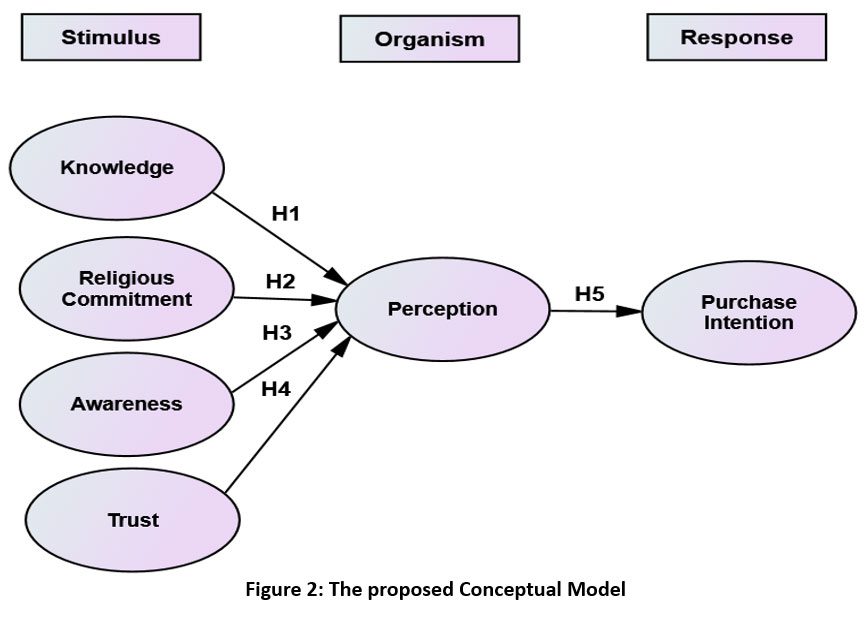 | Figure 2: The proposed Conceptual Model |
Hypothesis Development
The proposed adaptation of the S-O-R model generates five key hypotheses that structure the research inquiry. First, knowledge is posited to positively influence halal perception (H1), as demonstrated by studies showing how informed consumers make more discerning halal evaluations (Said et al., 2014; Hwang and Nam, 2021). Second, religious commitment is hypothesized to strengthen halal perception (H2), consistent with findings that religiosity enhances compliance sensitivity (Mukhtar & Butt, 2012). Third, awareness is expected to improve perception (H3), particularly in contexts where certification systems are weak (Rana, 2022). Fourth, trust is proposed as a critical perceptual enhancer (H4), building on evidence that credible halal logos increase consumer confidence (Tieman, 2013). Finally, positive halal perception is hypothesized to drive purchase intention (H5), completing the S-O-R sequence as observed in cross-cultural halal markets (Miftahuddin et al., 2022). Together, these hypotheses are outlined as follows:
H1: Knowledge of halal food has a positive and significant impact on consumers' perception of halal foods.
H2: Religious commitment has a positive and significant impact on consumers' perception of halal foods.
H3: Awareness of halal has a positive and significant impact on consumers' perception of halal foods.
H4: Trust has a positive and significant impact on consumers' perceptions of halal foods.
H5: Consumer perception has a positive and significant impact on the intention to purchase halal food products.
Results
The literature review identifies four key constructs—knowledge, religious commitment, awareness, and trust—as critical external stimuli shaping Muslim consumers' perception of halal food products. These constructs are particularly significant in Muslim-majority contexts like Bangladesh, where halal compliance is both a religious obligation and a driver of consumer behavior. Empirical evidence demonstrates that knowledge enhances consumers' ability to evaluate product authenticity, while insufficient knowledge can lead to misperceptions (Hamdan et al., 2013; Said et al., 2014). Religious commitment strengthens preferences for halal-compliant goods, with deeper faith positively influencing perceptions of authenticity (Rahman et al., 2015; Iranmanesh et al., 2020). Awareness of halal standards and certification fosters trust and confidence, even in products from non-Muslim companies (Bashir et al., 2019; Aziz & Chok, 2013). Finally, trust in halal certification and logos reduces uncertainty and enhances consumer confidence, driving purchase intentions (Tieman & Ghazali, 2014). These findings collectively validate the proposed model, positioning perception as the mediator between external stimuli and purchase intention.
Discussion
This study integrates the Stimulus-Organism-Response (S-O-R) framework to explore how external stimuli—knowledge, religious commitment, awareness, and trust—shape Muslim consumers' perception of halal products and influence purchase intentions. The findings highlight the centrality of perception as a mediator, bridging external stimuli and behavioral outcomes. This aligns with prior studies emphasizing perception's role in activating cognitive beliefs and driving purchase decisions (Elseidi, 2018)
Theoretically, this study contributes by offering a holistic framework that integrates multiple stimuli, addressing a gap in the literature on halal consumer behavior in Muslim-majority contexts like Bangladesh. It underscores the importance of cultural and religious factors, particularly in regions where religiosity significantly influences consumer decisions. Practically, the findings suggest that businesses and policymakers should prioritize educational campaigns to enhance halal knowledge, strengthen certification processes to build trust, and raise awareness through transparent labeling and marketing. Emphasizing the religious and ethical dimensions of halal products can further align strategies with consumer values. While the proposed model provides valuable insights, it is limited by its reliance on literature rather than empirical data. Future research should validate the model through quantitative studies to offer a more comprehensive understanding of halal consumer behavior.
Conclusion
This study highlights the critical role of consumer perception in the halal food market, shaped by knowledge, religious commitment, trust, and awareness. The findings demonstrate that perception acts as a pivotal mediator between external stimuli and purchase intention, providing a nuanced understanding of consumer behavior in this context. For Bangladesh, addressing the gaps in halal certification, combating food adulteration, and enhancing consumer awareness are imperative to building trust and fostering market integrity. Future research should focus on empirical validation of the proposed S-O-R model across diverse cultural and economic contexts to generalize its applicability. Longitudinal studies could explore how changes in awareness campaigns, regulatory frameworks, and market dynamics influence consumer perception over time. Additionally, examining the role of digital technologies, such as blockchain for halal certification transparency, could provide innovative solutions to existing challenges. These endeavors will not only refine theoretical models but also offer practical insights for advancing halal consumer behavior research.
Acknowledgement
The authors would like to thank Md. Bazlur Rahman and Mir Hossain Sohel for their profound guidance and suggestions that add significant value to the study.
Funding Sources
The authors received no financial support for the research, authorship, and/or publication of this article.
Conflict of Interest
The authors declares no conflict of interest.
Data Availability Statement
This statement does not apply to this article.
Ethics Statement
This research did not involve human participants, animal subjects, or any material that requires ethical approval.
Informed Consent Statement
This study did not involve human participants, and therefore, informed consent was not required.
Permission to reproduce material from other sources
This study did not include any reproduced materials, hence permission to reproduced material from other sources was not required.
Author Contributions
Sakera Begum: Conceptualization, Methodology, Writing – Original and final Draft.
Mohammed Alamgir: Visualization, Supervision, Project Administration.
Tanima Sharmin: Data Collection, Formatting and editing.
Tayub Chowdhury: Supervision and Proofreading.
References
- Al-Qaradawi, Y. (2013). The Lawful and the Prohibited in Islam: What is permissible and what is forbidden in Islam. The Other Press.
- Shah Alam, S., & Mohamed Sayuti, N. (2011). Applying the Theory of Planned Behavior (TPB) in halal food purchasing. International journal of Commerce and Management, 21(1), 8-20.
CrossRef - Department of Islamic Development Malaysia (2005). Manual Procedure of Halal certification Malaysia, Malaysia.
- Expert Market Research. (2024). Global Halal Food Market Report and Forecast 2024-2032. Retrieved from https://www.expertmarketresearch.com/reports/halal-food-market
- Regenstein, J. M., Chaudry, M. M., & Regenstein, C. E. (2003). The kosher and halal food laws. Comprehensive reviews in food science and food safety, 2(3), 111-127.
CrossRef - Rahman, B. (2017). Food safety in Bangladesh: challenges and concerns. The Daily Sun, 29.
- Ashraf, M. A. (2019). Islamic marketing and consumer behavior toward halal food purchase in Bangladesh: An analysis using SEM. Journal of Islamic Marketing, 10(3), 893-910.
CrossRef - Schiffman, L. G., & Kanuk, L. L. (1997). Consumer Behavior. Upper Saddle River, NJ: Prentice Hall.
- Riaz, H. A. (2015). Impact of brand image on consumer buying behavior in clothing sector: A comparative study between males and females of Central Punjab (Lahore) and Southern Punjab (Multan). Arabian Journal of Business and Management Review (Kuwait Chapter), 4(9), 24-35.
CrossRef - Rai, S., Wai, P. P., Koirala, P., Bromage, S., Nirmal, N. P., Pandiselvam, R., ... & Mehta, N. K. (2023). Food product quality, environmental and personal characteristics affecting consumer perception toward food. Frontiers in Sustainable Food Systems, 7, 1222760.
CrossRef - Tamilmani, S., & Jeyalakshmi, S. (2020). Consumer perception on International FMCG product: an investigative study. International Journal of Applied Research, 6(2), 40 44. https://www.allresearchjournal.com/archives/2020/vol6issue2/PartA/6-1-59-185.pdf
- Pellegrino, A. (2024). Consumer Perceptions. How Digital Marketing Has Changed Consumer Perceptions. In Decoding Digital Consumer Behavior: Bridging Theory and Practice (pp. 31-53). Singapore: Springer Nature Singapore.
CrossRef - Kumar, Y., Ricci, A., Parpinello, G. P., & Versari, A. (2024). Dealcoholized wine: a scoping review of volatile and non-volatile profiles, consumer perception, and health benefits. Food and Bioprocess Technology, 17(11), 3525-3545.
CrossRef - Mukhtar, A., & Butt, M. M. (2012). Intention to choose Halal products: the role of religiosity. Journal of Islamic marketing, 3(2), 108-120.
CrossRef - Ambali, A. R., & Bakar, A. N. (2014). People's awareness on halal foods and products: potential issues for policy-makers. Procedia-Social and Behavioral Sciences, 121, 3-25.
CrossRef - World Population Review. (2024). Muslim population by country. Retrieved from https://worldpopulationreview.com/country-rankings/muslim-population-by-country
- Rahman, F. K., Tareq, M. A., Yunanda, R. A., & Mahdzir, A. (2017). Maqashid Al-Shari’ah-based performance measurement for the halal industry. Humanomics, 33(3), 357-370.
CrossRef - Rahman, M. A., Mohiuddin, M. G., & Kushtia, B. (2015). Islamic management and its present applications in Islamic organizations in Bangladesh. International Journal of Islamic Management and Business, 1(1), 65-93.
- Shafie, S., & Othman, M. N. (2006, September). Halal certification: an international marketing issues and challenges. In Proceeding at the International IFSAM VIIIth World Congress (Vol. 28, p. 30). Kuala Lumpur: University of Malaya Press
- Said, M., Hassan, F., Musa, R., & Rahman, N. A. (2014). Assessing consumers’ perception, knowledge and religiosity on Malaysia's halal food products. Procedia-Social and Behavioral Sciences, 130, 120-128.
CrossRef - Rana, S. (2022). Consumer awareness and perception towards green marketing: An empirical study in Bangalore City. Journal of Positive School Psychology http://journalppw. com, 6(5), 4240-4245.
- Bar, M., Kassam, K. S., Ghuman, A. S., Boshyan, J., Schmid, A. M., Dale, A. M., ... & Halgren, E. (2006). Top-down facilitation of visual recognition. Proceedings of the national academy of sciences, 103(2), 449-454.
CrossRef - Newaz, F. T., Fam, K. S., & Sharma, R. R. (2016). Muslim religiosity and purchase intention of different categories of Islamic financial products. Journal of Financial Services Marketing, 21, 141-152.
CrossRef - Todaro, N. M., Gusmerotti, N. M., Daddi, T., & Frey, M. (2023). Do environmental attitudes affect public acceptance of key enabling technologies? Assessing the influence of environmental awareness and trust on public perceptions about nanotechnology. Journal of Cleaner Production, 387, 135964.
CrossRef - Purwanto, A., & Sudargini, Y. (2021). Exploring factors affecting the purchase intention of halal food products: An empirical study on student consumers. International Journal of Social and Management Studies, 2(4), 13-21.
- Jaakkola, E. (2020). Designing conceptual articles: four approaches. AMS review, 10(1), 18-26.
CrossRef - MacInnis, D. J. (2011). A framework for conceptual contributions in marketing. Journal of Marketing, 75(4), 136-154.
CrossRef - Burhanuddin, B., & Chusaemah, C. (2023). The Effects of Halal Food Socialization by the Culture and Tourism Office of South Sulawesi to the Increase of Tourists Visit in the City of Makasssar. International Journal of Halal System and Sustainability, 3(2).
- Zailani, S., Jafarzadeh, S., Iranmanesh, M., Nikbin, D., & Selim, N. I. I. (2018). Halal logistics service quality: conceptual model and empirical evidence. British Food Journal, 120(11), 2599-2614.
CrossRef - Iranmanesh, M., Mirzaei, M., Parvin Hosseini, S. M., & Zailani, S. (2020). Muslims’ willingness to pay for certified halal food: an extension of the theory of planned behaviour. Journal of Islamic Marketing, 11(1), 14-30.
CrossRef - Kotler, P., & Armstrong, G. (2010). Principles of marketing. Pearson education.
- Crane, T., & French, C. (2021). The problem of perception. The Stanford encyclopedia of philosophy.
- Mullins, R. R., Ahearne, M., Lam, S. K., Hall, Z. R., & Boichuk, J. P. (2014). Know your customer: How salesperson perceptions of customer relationship quality form and influence account profitability. Journal of Marketing, 78(6), 38-58.
CrossRef - Bredlau, S. (2019). On perception and trust: Merleau-Ponty and the emotional significance of our relations with others. Continental Philosophy Review, 52(1), 1-14.
CrossRef - Mukul, A., Afrin, S., & Hassan, M. M. (2013). Factors affecting consumers’ perceptions about organic food and their prevalence in Bangladeshi organic preference. Journal of Business and Management Sciences, 1(5), 112-118.
- Hussain, I., Rahman, S. U., Zaheer, A., & Saleem, S. (2016). Integrating factors influencing consumers’ halal products purchase: Application of theory of reasoned action. Journal of international food & agribusiness marketing, 28(1), 35-58.
CrossRef - Rahim, N. F., & Shahwan, S. (2013). Awareness and perception of muslim consumers on non-food halal product. Journal of Social and Development Sciences, 4(10), 478-487.
CrossRef - Asnawi, N., Sukoco, B. M., & Fanani, M. A. (2018). Halal products consumption in international chain restaurants among global Moslem consumers. International Journal of Emerging Markets, 13(5), 1273-1290.
CrossRef - Macdonald, E. K., & Sharp, B. M. (2000). Brand awareness effects on consumer decision maki
- Awan, H. M., Siddiquei, A. N., & Haider, Z. (2015). Factors affecting Halal purchase intention–evidence from Pakistan’s Halal food sector. Management Research Review, 38(6), 640-660.
CrossRef - Ak?n, M. S., & Okumu?, A. (2021). Shaping the consumers’ attitudes towards Halal food products in Turkey. Journal of Islamic Marketing, 12(6), 1081-1096.
CrossRef - Hasan, H. (2016). A study on awareness and perception towards halal foods among Muslim students in Kota Kinabalu, Sabah. In Proceedings of the Australia-Middle East Conference on Business and Social Sciences (Vol. 6, pp. 803-811).
- Maifiah, M. H. M., Ahmad, A. N., Azam, M. S. E., Norazmi, A. R. M., & Nawawi, K. A. (2022). Malaysian Muslim consumers’ awareness, confidence, and purchase behaviour on halal meat and its products after the meat cartel scandal. Food Research, 6(6), 273-279.
CrossRef - Rahim, N. F. B. (2016). Consumer behaviour, perception and planning towards halal marketing. In Advances in Islamic Finance, Marketing, and Management: An Asian Perspective (pp. 271-307). Emerald Group Publishing Limited.
CrossRef - Rahman, M. A.., (2021) Concept of Halal, Is It Truly Safe & Hygiene or Is It only an Islamic Belief: Insights from Bangladesh.
- Latif, I. A., Mohamed, Z., Sharifuddin, J., Abdullah, A. M., & Ismail, M. M. (2014). A comparative analysis of global halal certification requirements. Journal of Food Products Marketing, 20(sup1), 85-101.
CrossRef - Ahmed, A. (2008). Marketing of halal meat in the United Kingdom: Supermarkets versus local shops. British Food Journal, 110(7), 655-670.
CrossRef - Akter, K., Khandaker, M., Aziz, M. A., Mahmud, S., Morshed, M. N., & Uddin, G. M. (2021). Halal food safety: PCR based detection of porcine DNA in imported chocolate. Asian Food Science Journal, 20(3), 61-71.
CrossRef - Ruslan, A. A. A., Kamarulzaman, N. H., & Sanny, M. (2018). Muslim consumers' awareness and perception of Halal food fraud. International Food Research Journal, 25, S87-S96.
- Bhuiyan, A. H., & Darda, A. (2018). Prospects and potentials of halal tourism development in Bangladesh. Journal of Tourismology, 4(2), 93-106.
- Fatema, M., Islam, M. A., & Bakar, R. (2018). Halal purchase intention-a study on Islamic banks of Bangladesh. The Journal of Social Sciences Research, 4(12), 402-412.
- Kabir, S., & Ali, M. Y. (2020). An exploration of the Halal food export potential for Bangladesh. Journal for Global Business Advancement, 13(6), 779-800.
CrossRef - Alba, J. W., & Hutchinson, J. W. (1987). Dimensions of consumer expertise. Journal of consumer research, 13(4), 411-454.
CrossRef - Nurhayati, T., & Hendar, H. (2020). Personal intrinsic religiosity and product knowledge on halal product purchase intention: Role of halal product awareness. Journal of Islamic Marketing, 11(3), 603-620.
CrossRef - Öztürk, A. (2022). The effect of halal product knowledge, halal awareness, perceived psychological risk and halal product attitude on purchasing intention. Business and Economics Research Journal, 13(1), 127-141.
CrossRef - Rock, I. (1985). Perception and knowledge. Acta Psychologica, 59(1), 3-22.
CrossRef - Fodor, J. A. (1985). Precis of the modularity of mind. Behavioral and brain sciences, 8(1), 1-5.
CrossRef - Bauer, R. A. (1967). Consumer behavior as risk taking. Marketing: Critical perspectives on business and management, 593, 13-21.
- Worthington Jr, E. L., Hook, J. N., Davis, D. E., & McDaniel, M. A. (2011). Religion and spirituality. Journal of clinical psychology, 67(2), 204-214.
CrossRef - Mohamed, Z., Rezai, G., Shamsudin, M. N., & Chiew, E. F. C. (2008). Halal logo and consumers’ confidence: What are the important factors. Economic and Technology Management Review, 3(1), 37-45.
- Othman, A. A., Hashim, R. C., & Aziz, A. A. (2010). An overview of Shari'ah issues regarding the application of the Islamic letter of credit practice in Malaysia. ISRA International Journal of Islamic Finance, 2(2), 37-66.
CrossRef - Vaidyanathan, R., & Aggarwal, P. (2005). Using commitments to drive consistency: enhancing the effectiveness of cause?related marketing communications. Journal of Marketing Communications, 11(4), 231-246.
CrossRef - Sitasari, I. (2008). Consumer preferences and behavior attributes Islamic credit card. Unpublished Thesis Report. Depok: PSTTI-UI [Program Pascasarjana Studi Timur Tengah dan Islam–Universitas Indonesia].
- Summers-Effler, E. (2004). A theory of the self, emotion, and culture. In Theory and Research on Human Emotions (pp. 273-308). Emerald Group Publishing Limited.
CrossRef - Bermudez, J. L. (2015). Bodily ownership, bodily awareness and knowledge without observation. Analysis, 75(1), 37-45.
CrossRef - Føllesdal, D. (2020). Brentano and husserl on intentionality. Franz Brentano and Austrian Philosophy, 23-48.
CrossRef - Ramsøy, T. Z., & Overgaard, M. (2004). Introspection and subliminal perception. Phenomenology and the cognitive sciences, 3, 1-23.
CrossRef - Aziz, Y. A., & Chok, N. V. (2013). The role of Halal awareness, Halal certification, and marketing components in determining Halal purchase intention among non-Muslims in Malaysia: A structural equation modeling approach. Journal of International Food & Agribusiness Marketing, 25(1), 1-23.
CrossRef - Abdul, M., Ismail, H., Hashim, H., & Johari, J. (2009). Consumer decision making process in shopping for halal food in Malaysia. China-USA Business Review, 8(9), 40-47.
- Tieman, M., & Ghazali, M. C. (2014). Halal control activities and assurance activities in halal food logistics. Procedia-Social and Behavioral Sciences, 121, 44-57.
CrossRef - Bashir, A. M., Bayat, A., Olutuase, S. O., & Abdul Latiff, Z. A. (2019). Factors affecting consumers’ intention towards purchasing halal food in South Africa: a structural equation modelling. Journal of food products marketing, 25(1), 26-48.
CrossRef - Mirabi, V., Akbariyeh, H., & Tahmasebifard, H. (2015). A study of factors affecting on customers purchase intention. Journal of Multidisciplinary Engineering Science and Technology (JMEST), 2(1).
- Soebahar, E., Ghoni, A., & Muhajarah, K. (2021). Effect of halal management system certified awareness on consumer purchase intention. Uncertain Supply Chain Management, 9(2), 317-328.
CrossRef - Malik, M. E., Ghafoor, M. M., Iqbal, H. K., Ali, Q., Hunbal, H., Noman, M., & Ahmad, B. (2013). Impact of brand image and advertisement on consumer buying behavior. World Applied Sciences Journal, 23(1), 117-122.
- Rajagopal, S., Ramanan, S., Visvanathan, R., & Satapathy, S. (2011). Halal certification: implication for marketers in UAE. Journal of Islamic Marketing, 2(2), 138-153.
CrossRef - Miftahuddin, M. A., Adawiyah, W. R., Pradipta, R., & Wihuda, F. (2022). Examining the effect of halal perceived value and perceived risk on purchase intention: A mediating role of halal trust. Innovative Marketing, 18(4), 62-73.
CrossRef - Mehrabian, A., & Russell, J. A. (1974). A verbal measure of information rate for studies in environmental psychology. Environment and Behavior, 6(2), 233.
CrossRef - Islam, J. U., & Rahman, Z. (2017). The impact of online brand community characteristics on customer engagement: An application of Stimulus-Organism-Response paradigm. Telematics and Informatics, 34(4), 96-109.
CrossRef - Sohaib, O., & Kang, K. (2015). Individual level culture influence on online consumer iTrust aspects towards purchase intention across cultures: A SOR model. International Journal of Electronic Business, 12(2), 142-161.
CrossRef - Rose, S., Clark, M., Samouel, P., & Hair, N. (2012). Online customer experience in e-retailing: an empirical model of antecedents and outcomes. Journal of retailing, 88(2), 308-322.
CrossRef - Robert, D., & John, R. (1982). Store atmosphere: an environmental psychology approach. Journal of retailing, 58(1), 34-57.
- Bagozzi, R. P. (1986). Principles of marketing management. Science Research Associates.
- Lee, S., Ha, S., & Widdows, R. (2011). Consumer responses to high-technology products: Product attributes, cognition, and emotions. Journal of business research, 64(11), 1195-1200.
CrossRef - Frow, P., & Payne, A. (2007). Towards the ‘perfect’customer experience. Journal of Brand Management, 15(2), 89-101.
CrossRef - Tynan, C., & McKechnie, S. (2009). Experience marketing: a review and reassessment. Journal of marketing management, 25(5-6), 501-517.
CrossRef - Lee, H. J., & Yun, Z. S. (2015). Consumers’ perceptions of organic food attributes and cognitive and affective attitudes as determinants of their purchase intentions toward organic food. Food quality and preference, 39, 259-267.
CrossRef - Vergura, D. T., Zerbini, C., & Luceri, B. (2020). Consumers’ attitude and purchase intention towards organic personal care products. An application of the SOR model. Sinergie Italian Journal of Management, 38(1), 121-137.
- Phang, G., & de Run, E. C. (2007). Celebrity endorser and respondents gender: Its impact on company, behavioral and attitudinal variables. Jurnal Kemanusiaan, 5(2).
- Garg, P., & Joshi, R. (2018). Purchase intention of “Halal” brands in India: the mediating effect of attitude. Journal of Islamic Marketing, 9(3), 683-694.
CrossRef - Widodo, T. (2013). The influence of Muslim consumers perception toward halal food product on attitude and purchase intention at retail stores. Inovbiz, 1(1), 1-18.
- Tieman, M. (2013). Establishing the principles in halal logistics. Journal of Emerging Economies and Islamic Research (JEEIR), 1(1), 1-13.
CrossRef - Gregory, R. L. (1997). Knowledge in perception and illusion. Philosophical Transactions of the Royal Society of London. Series B: Biological Sciences, 352(1358), 1121-1127.
CrossRef - Hwang, H., & Nam, S. J. (2021). The influence of consumers’ knowledge on their responses to genetically modified foods. GM Crops & Food, 12(1), 146-157.
CrossRef - Nurrachmi, I., Setiawan, S., & Saripudin, U. (2020). Motivation for purchasing halal products: the influence of religiosity, trust, and satisfaction. Humanities and Social Sciences Reviews, 8(5), 210-218.
CrossRef - Talib, H. A., Ali, K. M., Jamaludin, K. R., & Rijal, K. (2008, May). Quality assurance in halal food manufacturing in Malaysia: A preliminary study. In Proceedings of International Conference on Mechanical & Manufacturing Engineering (ICME2008) (pp. 21-23).
- El-Gohary, H. (2016). Halal tourism, is it really Halal?. Tourism Management Perspectives, 19, 124-130.
CrossRef - Fathi, E., Zailani, S., Iranmanesh, M., & Kanapathy, K. (2016). Drivers of consumers’ willingness to pay for halal logistics. British Food Journal, 118(2), 464-479.
CrossRef - Elseidi, R. I. (2018). Determinants of halal purchasing intentions: evidences from UK. Journal of Islamic Marketing, 9(1), 167-190
CrossRef - Mursid, A., & Anoraga, P. (2022). Halal destination attributes and revisits intention: the role of destination attractiveness and perceived value. International Journal of Tourism Cities, 8(2), 513-528.
CrossRef - Grunert, K. G. (2005). Food quality and safety: consumer perception and demand. European review of agricultural economics, 32(3), 369-391.
CrossRef - Rahman, R. A., Zahari, M. S. M., Hanafiah, M. H., & Mamat, M. N. (2021). Effect of halal food knowledge and trust on Muslim consumer purchase behavior of Syubhah semi-processed food products. Journal of Food Products Marketing, 27(6), 319-330.
CrossRef - Robbins, B. G. (2016). What is trust? A multidisciplinary review, critique, and synthesis. Sociology compass, 10(10), 972-986.
CrossRef - Foddy, M., Platow, M. J., & Yamagishi, T. (2009). Group-based trust in strangers: The role of stereotypes and expectations. Psychological Science, 20(4), 419-422.
CrossRef - Mayer, R. C., Davis, J. H., & Schoorman, F. D. (1995). An integrative model of organizational trust. Academy of management review, 20(3), 709-734.
CrossRef - Petty, R. E., & Cacioppo, J. T. (2012). Communication and persuasion: Central and peripheral routes to attitude change. Springer Science & Business Media.

This work is licensed under a Creative Commons Attribution 4.0 International License.